 EN
EN FR
FR PT
PT
Two “best club in France” titles in a single season. An unprecedented double between the CFJJB and France Judo. And above all, nearly twenty years of shared history on the same mats in Boulogne, near Paris. In this new episode of On the Road, Wilfried Sam welcomes three pillars of the Z-Team. They reveal what the trophies never show: the culture of a club where, as they love to repeat, “the mat doesn’t lie”.
For this episode, Boueyley Wilfried Sam, creator of the On the Road podcast, brings together three faces of the Z-Team. First, Mehdi Allaoui, the club’s coach. Then Momen Ferrah, competitor and entrepreneur. Finally, Ilyes Barafane, a lifelong competitor. All three have known each other since the late 2000s. The result: more than two hours of conversation between teammates, and a rare look inside the most decorated French club of the moment. The Z-Team tells the story of its origins, its famous “hard mats” and its record season. Above all, no touchy subject is off limits: crowdfunding campaigns, money in BJJ, the future of French high-level grappling.
Note: the episode is in French. This article sums it up for the international BJJ community.
The Z-Team, an institution of French BJJ
Ask them to sum up the Z-Team in one sentence and the answer comes instantly: “it’s an institution”. The club was founded in 2002 in Boulogne-Billancourt, as a non-profit association. Since then, it has produced four generations of black belts. According to its members, a good part of French jiu-jitsu has passed through its doors at some point. Yet the model has stayed true to its roots. Membership fees remain low: 250 € for students, around 390 € for adults according to the episode. Moreover, most of the coaching is done by volunteers. The stated goal is not to make money, but to grow the club and support its competitors.
That paradox is what makes the episode so compelling. Indeed, a non-profit club where almost everyone has a day job dominates the national circuit. And it does so against private academies and full-time athletes. How? The answer lies in a culture. And that culture has a history.
From the early days to the “Rookies” generation
The three guests started between 2007 and 2009. Back then, the French scene looked nothing like today. There were a handful of clubs in the Paris region and two or three competitions a year. Moreover, there was no structured circuit and no social media. Momen Ferrah discovered grappling in high school, submitted twice in a row by a classmate. Stung, he did his research, then walked into the Boulogne club shortly after. Meanwhile, Ilyes Barafane and Mehdi Allaoui met almost the same week, in 2009, in a Paris club. They later joined the Z-Team as blue belts.
There, they formed a core group of six young athletes. The club’s veterans nicknamed them the “Rookies”: the rising generation. Friends in life, they became ferocious rivals in training. They describe internal battles of ten to fifteen minutes, no limits, until submission. The whole club would gather around the mat to shout. “There was the physical training, and then there was the mental training”, one of them sums up. In other words, losing in training meant getting roasted all the way to the locker room. That assumed harshness is presented as the foundation of their composure in competition. Because after a Z-Team sparring session, no tournament can intimidate you.
That core group then strung together international campaigns, often self-funded. Podiums followed at the Pans, the Europeans and the World Pro in colored belts. All while holding down jobs. Indeed, the episode reminds us that back then, nobody at the club made a living from jiu-jitsu. One was a baker, another was launching his first company. Training sessions were squeezed between two working days.
“The mat doesn’t lie”: the club’s secret
How does a club that is “recreational” on paper compete with full-time athletes? On that point, the three guests agree: intensity beats volume. Back then, they trained four times a week. But the sessions were long, dense, and the daily level of rolling was very high. “There’s a natural selection going on”, Ilyes admits with a smile. Those who can’t handle the pressure of the mat leave. The others, in contrast, pull each other up.
That internal rivalry serves as their mental preparation. Momen recalls, for instance, leaving his office to go train, then coming back to finish his workday in the evening. Switching off was impossible: losing to his club rivals was not an option. Finally, one phrase keeps coming back like a mantra throughout the episode: “the mat doesn’t lie”. Trophies and social media can tell whatever story they want. The truth about a club, however, is measured when you come and roll there.
A record season: the Z-Team’s historic double
The heart of the episode covers the 2025-2026 season, the most successful in the club’s history according to the guests. The tally is dizzying. First, a win at the Condo Fight to open the season, a team competition for blue belts. Then the Sky League, the interclub circuit that runs all year long. Then the Diamond Fight. And above all, the title of best club in France at the CFJJB French championships, for the second year in a row. That title was doubled with the same trophy at the first French championships organized under the France Judo banner. Finally, the trophy ceremony took place at the Institut du Judo in Paris, in front of several hundred members and partner clubs gathered on the tatami.
The Diamond Fight and its controversial rule
The episode dwells on the Diamond Fight, an unusual team format. It is a full absolute: no weight classes, no belt divisions. Z-Team beat Infinity in the first round (3-2 according to the guests), then dominated Team CDK in the final. The prize: a 4,000 € check, fully redistributed to the team’s fighters. The tournament also had its controversial moment. Indeed, a draw between an Infinity brown belt and a Z-Team white belt was decided in favor of the lower rank. Yet both teams only discovered that rule on the day itself. The guests stand by the result, but admit one thing: had the roles been reversed, they would probably have reacted like their opponents. On such a new format, the rules will therefore be refined edition after edition.
A French championship on home turf
This year, the CFJJB French championships were held a ten-minute walk from the club. The atmosphere showed it. The guests describe finals fought under the cheers of a whole neighborhood that came to support its own. Among the highlights, one purple belt final left a mark. It pitted a young Z-Team athlete, a purple belt for only three months, against Virgile Grandjean, a member of the French national team. A wide-open fight, hailed as one of the sporting peaks of the day. The guests also praise the performance of Lucas Gaffet. They describe him as a competitor with rare tactical clarity, able to pick the right option in the chaos of a close match.
A model that invests in its competitors
Behind the results, the episode details a little-known internal system. The previous season, the club had set up an internal points ranking with end-of-year bonuses. This season, the logic evolved. Now, internal tryouts decide who represents the club in the Sky League. Moreover, the winners earned a full “package” to compete at the European championships in Lisbon: flight and registration included. The result: one of the selected athletes came home with a podium in the adult blue belt division. The idea is simple. It is about helping competitors before the performance, rather than rewarding them after the fact.
Can you make a living from BJJ in France? The big debate
The crowdfunding controversy
True to the podcast’s spirit, Wilfried Sam pushes his guests onto touchy ground: money. The starting point? The trend of online crowdfunding campaigns launched by competitors to fund their trips. Guests’ verdict is blunt. Before asking other people for money, you need perspective on your own level. “Get strong at home, win in France, and the rest will follow”, Momen sums up in essence. According to him, sponsors and club support come naturally once the results are there. Everyone remains free, they clarify. But the message is clear.
Three ways to live off jiu-jitsu
Wilfried then structures the debate into three scenarios. First case: the pure athlete. The answer is nuanced. At best, they “break even” by stacking competition prize money, grants, private lessons and sponsors. The high-level athlete status in France does open regional funding. It is also easier at 18, with few expenses. Second case: the teacher and ecosystem player, between classes, seminars and content. There, the answer is yes, especially from black belt onward.
Third case, finally: the side business, the brand or the 100 % BJJ media outlet. That is the riskiest bet according to them, because the market remains a niche. On the other hand, that niche spends a lot. The yearly basket of a BJJ practitioner is far above that of other tatami sports. Wilfried, whose media On the Road went all-in on jiu-jitsu, therefore sees it as a matter of audience and patience. Indeed, the discipline is growing at double-digit rates in France. According to projections mentioned in the episode, it could even pass 150,000 registered members within five years.
An unexpected image asset
One more personal passage is worth the detour. Momen recounts hiding his practice in his professional life for years, fearing the clichés attached to combat sports. Then everything flipped during a fundraising round. An investor advised him, on the contrary, to highlight his competitor’s journey. Today, jiu-jitsu is seen as a demanding martial art rather than a brawl. It has even become an image asset in the business world. In short, a shift in perception that says a lot about the discipline’s place in France.
What’s next? A pro team and youth development
The Z-Team has no plans to stop there. Without revealing everything, the guests announce the creation of a “pro team” for the new season, led by Mehdi Allaoui. Concretely, a group of competitors will be supported financially and athletically throughout the year, in line with the Lisbon packages. Furthermore, the club is thinking about structuring its youth development. The observation is simple: soon, the very top level will be out of reach for those who didn’t start as kids. With its Paris-region talent pool, its history and its “four generations of black belts”, the Z-Team believes it holds all the cards.
The final word goes to the guests. And it applies far beyond jiu-jitsu. Surround yourself with people who share your goals. If your environment doesn’t pull you up, build it. “There are too many lions surrounded by people who don’t think like them”, Mehdi says. Finally, to understand the journey from white to black belt and the vocabulary of that world, our English BJJ glossary is a useful companion to the episode.
FAQ: the Z-Team and this On the Road episode
What is the Z-Team in Brazilian jiu-jitsu?
The Z-Team is a non-profit Brazilian jiu-jitsu club founded in 2002 in Boulogne-Billancourt, near Paris. It was named best club in France at the CFJJB championships two years in a row. Moreover, it won the same title at the first French championships organized by France Judo. The club has produced four generations of black belts and remains faithful to an affordable, volunteer-driven model.
Who are the guests of this On the Road episode?
Wilfried Sam welcomes three long-time members of the Z-Team: Mehdi Allaoui, the club’s coach, Momen Ferrah, competitor and entrepreneur, and Ilyes Barafane, competitor. All three have known each other since the late 2000s. They belong to the generation nicknamed the “Rookies” within the club.
What did the Z-Team win in the 2025-2026 season?
According to the recap given in the episode, the Z-Team won the Condo Fight, the Sky League and the Diamond Fight. Above all, it claimed the title of best club in France at the CFJJB championships, for the second year running. It then doubled with the same title at the first French championships organized by France Judo. The trophies were handed out at the Institut du Judo in Paris.
Can you make a living from Brazilian jiu-jitsu in France?
According to the episode’s guests, a pure athlete can at best “break even”. To do so, they must stack prize money, high-level athlete grants, lessons and sponsors. Living from teaching (classes, seminars, running an academy), in contrast, is realistic, especially from black belt onward. Finally, side ventures such as brands or media remain the hardest bet, on a niche but fast-growing market.
Conclusion: French BJJ told through the club
After the inside story of the French national team and the CFJJB / France Judo institutional debate, On the Road adds an essential piece to the puzzle of French jiu-jitsu: the club. The Z-Team’s story proves the point: a non-profit structure, carried by volunteers, can build a genuine performance culture. And even dominate the national circuit. One question, however, remains open. Will this model survive the accelerating professionalization of the sport? The pro team announced for September will bring a first element of an answer. BJJ-Rules will be watching closely.
🎧 Watch the full episode on YouTube (in French)
Z-Team on Instagram
Mehdi Allaoui · Momen Ferrah · Ilyes Barafane
On the Road on Instagram · On the Road on YouTube
Learn from the best: our recommended instructionals
The videos we actually recommend, hand-picked from the BJJ Fanatics catalog.
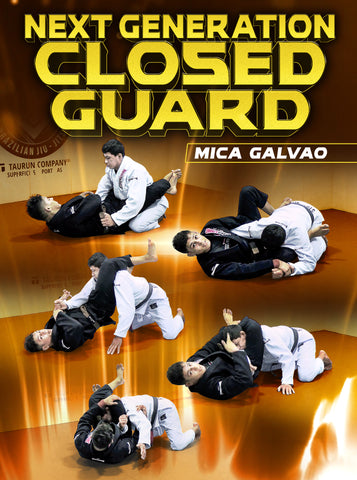
Mica Galvão
Next Generation Closed Guard
Closed guard reinvented by the Brazilian prodigy: chained attacks at competition pace.
View on BJJ Fanatics →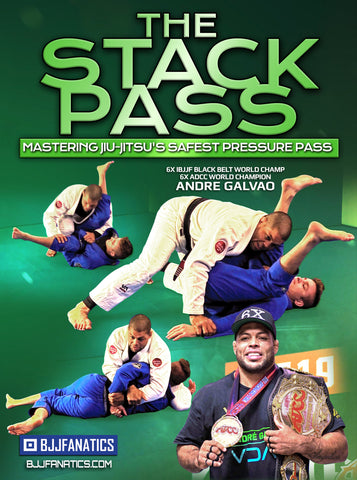
André Galvão
The Stack Pass
The stack pass in detail from the founder of Atos: pressure, timing and finishing the pass.
View on BJJ Fanatics →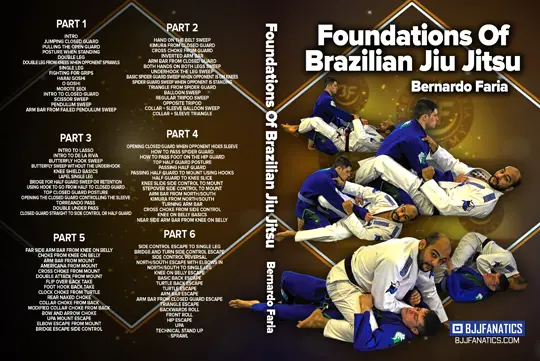
Bernardo Faria
Foundations of Brazilian Jiu Jitsu
BJJ Fanatics' best-selling fundamentals program, built for white and blue belts.
View on BJJ Fanatics →Disclosure: affiliate links. The price is the same for you and your purchase supports BJJ-Rules.