 EN
EN FR
FR PT
PT
Brazilian Jiu-Jitsu (or BJJ) is now one of the most popular martial arts in the world. But its rise didn’t happen overnight. From its Japanese roots to its dominance on the mats and in MMA cages, BJJ has gone through a rich evolution marked by decisive moments. To better understand this discipline, it’s essential to look at its past — not through a complete encyclopedia, but through 10 key dates that changed its destiny.
Here’s a simple and accessible timeline to understand how Brazilian Jiu-Jitsu became what it is today.
Summary:
- 1914 — Mitsuyo Maeda Arrives in Brazil
- 1925 — The First Gracie Academy
- 1951 — Hélio Gracie vs Kimura
- 1972 — BJJ Enters Competitive Sports
- 1980 — The Birth of Modern Jiu-Jitsu
- 1993 — Royce Gracie Wins UFC 1
- 1996 — The CBJJ is Founded
- 2007 — First World Championship Outside Brazil
- 2010 — BJJ in Law Enforcement and the Military
- 2022 — On the Road to the Olympic Games?
- Conclusion
In this article11
- 1914 — Mitsuyo Maeda Arrives in Brazil
- 1925 — The First Gracie Academy
- 1951 — Hélio Gracie vs Kimura
- 1972 — BJJ Enters Competitive Sports
- 1980 — The Birth of Modern Jiu-Jitsu
- 1993 — Royce Gracie Wins UFC 1
- 1996 — The Foundation of the CBJJ
- 2007 — First IBJJF World Championship Outside Brazil
- 2010 — BJJ in Law Enforcement and the Military
- 2022 — Toward Olympic Recognition?
- Conclusion: History of Brazilian Jiu-Jitsu Keeps Evolving
1914 — Mitsuyo Maeda Arrives in Brazil
A Japanese Pioneer, a Brazilian Legacy
The history of Brazilian Jiu-Jitsu truly begins in 1914. Japanese judoka Mitsuyo Maeda, a direct student of Jigoro Kano (the founder of judo), lands in Brazil after a long journey around the world. Maeda wasn’t just an instructor — he was an experienced fighter, known for challenging opponents of all styles in spectacular demonstrations.

His arrival in Brazil marks the beginning of the transmission of Japanese jiu-jitsu to the Gracie family — and more broadly, to Brazilian soil. In Belém, in the state of Pará, he meets Gastão Gracie and his son Carlos, to whom he teaches the foundations of his art.
Without knowing it, Maeda planted the very first seed of a tree that would grow into the Brazilian Jiu-Jitsu we know today.
1925 — The First Gracie Academy
The Beginning of a Family Empire
In 1925, Carlos Gracie opened the very first jiu-jitsu academy in Rio de Janeiro. It was a founding moment: BJJ was no longer passed on informally, but now taught as a structured art to the general public. Alongside his brothers — especially Hélio Gracie — Carlos laid the foundations of a style that would gradually set itself apart from traditional Japanese jiu-jitsu.
The Gracies didn’t just teach — they issued open challenges to fighters from all backgrounds. The goal was simple: to prove the effectiveness of jiu-jitsu against any opponent. This was the beginning of a philosophy rooted in real-world efficiency — the famous “Gracie Challenge” — and a powerful storytelling legacy that would carry the family to the top.
This period also marked the birth of a unique style, focused on ground fighting, defending against stronger opponents, and using technique over brute strength.
1951 — Hélio Gracie vs Kimura
A Legendary Defeat Turned into a Symbol
On October 23, 1951, a historic fight took place in Rio de Janeiro: Hélio Gracie, rising star of Brazilian jiu-jitsu, faced off against Japanese judoka Masahiko Kimura. Kimura was a living legend — three-time All-Japan champion, undefeated, and considered one of the greatest judokas of all time. The challenge was enormous, yet Hélio accepted it.

The fight took place in the Maracanãzinho Stadium, in front of thousands of spectators. Kimura dominated the match, using his power, technique, and experience to control Hélio. The fight ended with a brutal shoulder lock: Hélio refused to tap, and his brother Carlos had to throw in the towel to prevent serious injury.
Ironically, this defeat became a turning point in the BJJ legacy. First, because Hélio lasted several minutes against a judo monster, despite a clear weight and strength disadvantage. And second, because the lock used by Kimura — a gyaku ude-garami — would later become known worldwide as the Kimura. Today, it remains one of the most iconic submissions in modern BJJ.
This fight symbolizes the spirit of Brazilian Jiu-Jitsu: resisting, persevering, and relying on technique over strength. It also helped strengthen the Gracie legend — proving that even in defeat, courage and tenacity can define a legacy.

1972 — BJJ Enters Competitive Sports
From Street Fights to Organized Competition, the history of Brazilian Jiu-Jitsu
For decades, Brazilian Jiu-Jitsu grew in the shadows of academies, real-life challenge matches (the famous vale tudo), and the reputation of families like the Gracies or the Faddas. But in the 1970s, everything began to change. BJJ started to organize itself as a true sport, with rules, weight classes, and official tournaments.

In 1972, the first open Brazilian jiu-jitsu tournament was held in Rio de Janeiro. Although often overshadowed by the UFC or the Gracie Challenges, this was a foundational event for the sport’s structure. It brought BJJ out of its insular circles, helped popularize it, and laid the groundwork for a standardized technical system.
This shift to a sports framework also changed the mindset of practitioners. The goal was no longer just “survive in a street fight,” but also to perform under fair, competitive conditions against equally matched opponents. Time management, point strategy, and high-level technical refinement began to emerge.
This moment marked the beginning of a new era: the codification of Brazilian Jiu-Jitsu, the rise of championships, and the birth of a competitive scene that would keep growing — a key step on the road to worldwide recognition.
1980 — The Birth of Modern Jiu-Jitsu
A Technical Boom and the Rise of Rivalries
By the early 1980s, Brazilian Jiu-Jitsu entered a new phase of growth. It was no longer just about the Gracie family — new schools were emerging, alternative lineages were gaining strength, and a true technical culture was taking shape. The tatami became an innovation lab, with creative explosions in guard styles, transitions, and a more scientific approach to ground fighting.

This was the era when famous rivalries were born between academies like Gracie Barra, Carlson Gracie Team, Alliance, and Nova União. These often-heated rivalries pushed athletes to go further, refine their games, and develop distinct technical identities. BJJ was no longer just passed down — it was being reinvented.
The style evolved, positions multiplied, and matches became more dynamic. Term “modern jiu-jitsu” was coined to describe this more complete, fluid, and competitive version of BJJ, where strategy and technique outweighed mere survival instincts.
The 1980s laid the foundation for the Brazilian Jiu-Jitsu we know today — a constantly evolving martial art, rooted in tradition but driven by innovation.
1993 — Royce Gracie Wins UFC 1
BJJ Shocks the World
November 12, 1993, marked a turning point in Brazilian Jiu-Jitsu history. That day in Denver, Colorado, the very first UFC (Ultimate Fighting Championship) event took place — a no-holds-barred tournament with no weight classes, no gloves, and barely any rules. The goal? To find out which martial art was the most effective in a real fight.

Among the competitors, one quiet and slender man drew attention: Royce Gracie. He didn’t look intimidating, but he represented a style still unknown to most Americans — Gracie Jiu-Jitsu. One by one, Royce defeated his opponents — many larger and stronger — using smooth, efficient ground techniques and smart strategy.
By winning UFC 1, Royce Gracie gave Brazilian Jiu-Jitsu global exposure. Millions of viewers discovered that you could beat a boxer, a wrestler, or a karateka — not with brute strength, but with technique, timing, and leverage. The martial arts world was stunned.

This event sparked a global boom. BJJ academies began opening across the U.S., Europe, and Asia. Fighters wanted to learn “what Royce was doing.” Brazilian Jiu-Jitsu became a must-have skill for MMA, and the grappling world was changed forever.
1996 — The Foundation of the CBJJ
Unifying and Structuring the Sport
In 1996, as Brazilian Jiu-Jitsu grew rapidly on the international stage, the Confederação Brasileira de Jiu-Jitsu (CBJJ) was officially created. Its goal: to regulate the sport, standardize the rules, organize major competitions, and lay the foundation for a global BJJ circuit.

The CBJJ, led in part by Carlos Gracie Jr., played a key role in the professionalization of BJJ. It established clear standards: weight classes, match durations, a point system, belt regulations, and official rankings. For the first time, practitioners could progress within a structured and recognized framework.
The CBJJ quickly became the sport’s leading authority in Brazil. It later gave birth to its international branch: the IBJJF (International Brazilian Jiu-Jitsu Federation). The IBJJF would go on to organize the sport’s biggest global tournaments, including the Mundials, Pan Ams, and Europeans.
This milestone was crucial: it unified BJJ styles, organized athlete development, and helped position jiu-jitsu not just as a martial art or self-defense system, but as a legitimate and professional global sport.
2007 — First IBJJF World Championship Outside Brazil
A Truly International Sport
In 2007, for the first time in its history, the IBJJF World Championship — the Mundial — was held outside Brazil, in Long Beach, California. This shift was more than symbolic: it marked Brazilian Jiu-Jitsu’s transition into a truly international discipline.
The World Championship now attracted athletes from around the globe: Americans, Japanese, Europeans, Australians… All eager to test themselves against the best and chase a world title. Major teams like Gracie Barra, Alliance, Checkmat, and Atos began opening branches on every continent, and black belts from Brazilian lineages started teaching worldwide.
This geographic shift in the sport’s heartland symbolized a deeper transformation: Brazilian Jiu-Jitsu, once a local martial art, was now a global movement. BJJ is adopted, adapted, and reinvented by practitioners of every culture.
Brazil’s influence remained strong, of course. But as early as 2002, a new generation of international athletes began rising, challenging the Brazilian dominance. BJJ was no longer just Brazilian — it was global.
2010 — BJJ in Law Enforcement and the Military
Official Recognition and Real-World Use
Starting in 2010, Brazilian Jiu-Jitsu received a new form of recognition. It was officially adopted by numerous police and military forces around the world. In the United States especially, BJJ became a key component of SWAT, sheriff, and military training, thanks to its efficiency in controlling suspects without using excessive force.

The “Gracie Combatives” program — built around BJJ fundamentals for real-life scenarios — was integrated into many institutions. The U.S. Army also adopted BJJ as the foundation of its “Modern Army Combatives Program.” The reasoning was clear: jiu-jitsu provides tools to neutralize, control, and restrain an opponent without resorting to weapons. Ideal for law enforcement or peacekeeping missions.
Beyond the U.S., BJJ began spreading throughout police and military training programs in Europe, Latin America, and Asia. It was valued not only as a self-defense system but also as a way to develop confidence, calmness, and composure under pressure.
This institutional recognition confirmed what many already knew: Brazilian Jiu-Jitsu is more than a sport — it’s a practical life-saving discipline, capable of resolving conflict with control and minimal harm.
2022 — Toward Olympic Recognition?
Brazilian Jiu-Jitsu on the Olympic Horizon
In 2022, Brazilian Jiu-Jitsu reached a new milestone in its global journey: the sport was officially recognized by several international federations, and serious discussions began around its inclusion in future Olympic Games.

Although BJJ is not yet an Olympic sport, its rising popularity, clear rule system, and professional-level competitions make it a strong candidate. Events like the World Games and the Asian Games have already featured jiu-jitsu matches, signaling that the Olympic dream may be within reach.
Joining the Olympics would boost BJJ’s visibility, attract new funding for athletes, and encourage its integration into schools, universities, and national sports programs. However, some practitioners worry about over-standardization or a loss of BJJ’s original essence.
Regardless, this step shows how far BJJ has come: it’s now seen as a mature, organized, and global sport — capable of standing alongside judo, wrestling, and other Olympic disciplines. The dream is alive, and a new chapter may soon begin.
Conclusion: History of Brazilian Jiu-Jitsu Keeps Evolving
By retracing these ten key moments, we begin to understand how Brazilian Jiu-Jitsu is a living martial art — shaped by history, challenges, encounters, and constant innovation. From Maeda’s arrival in Brazil to BJJ’s presence on the Olympic horizon, every milestone has contributed to shaping jiu-jitsu into what it is today: a global sport, a life philosophy, and a tool for personal transformation.
But the History of Brazilian Jiu-Jitsu is far from over. New academies open every day, fresh techniques emerge, and entire generations discover the power of ground fighting. Whether you’re a beginner or an advanced student, you too are part of this living tradition — by learning, sharing, and teaching.
Brazilian Jiu-Jitsu isn’t stuck in the past. It evolves, it adapts, and it inspires. And it’s this ability to reinvent itself without losing its core that makes it such a unique discipline. The story goes on — on mats across the world, and through new legends being written every day.

Learn from the best: our recommended instructionals
The videos we actually recommend, hand-picked from the BJJ Fanatics catalog.
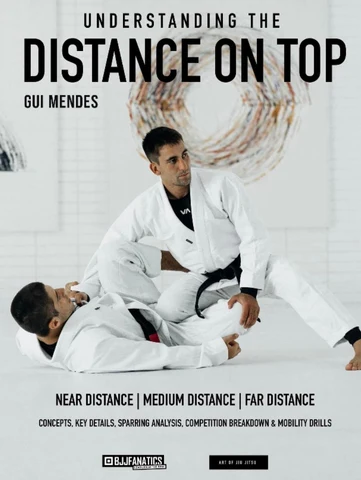
Gui Mendes
Understanding The Distance On Top
AOJ's three-distance passing system, the one Tainan Dalpra runs, taught by his coach.
View on BJJ Fanatics →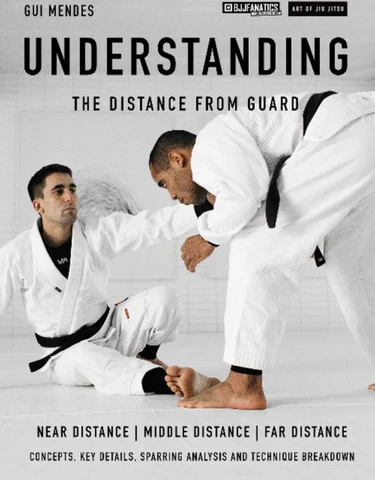
Gui Mendes
Understanding The Distance From Guard
The same distance framework, from the guard: collar-sleeve, De La Riva, X-guard.
View on BJJ Fanatics →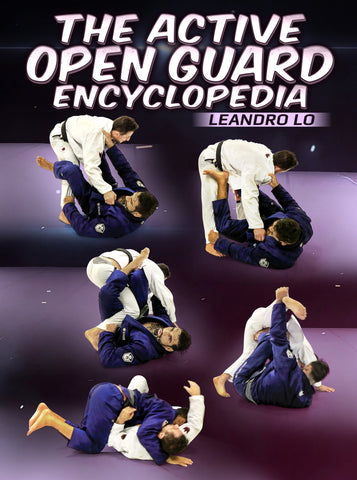
Leandro Lo
The Active Open Guard Encyclopedia
Leandro's open guard, from grip to sweep, in one complete encyclopedia.
View on BJJ Fanatics →Disclosure: affiliate links. The price is the same for you and your purchase supports BJJ-Rules.