 EN
EN FR
FR PT
PT
Fluid berimbolo, back transitions, modern guard game: Léon Larman has built a jiu-jitsu that works. At 27, this Montpellier native competes regularly on the IBJJF and AJP circuits. He represents Focus Jiu-jitsu and ranks among the most active French competitors of his generation.
A black belt since 2018, the Frenchman is also a member of the French CFJJB team. His profile embodies a generation of grapplers trained young. These athletes chose to expose themselves early to world competition. Their style reflects the technical evolution of contemporary sport jiu-jitsu.
From his first steps in the south of France to his California training periods with Caio Terra, his journey tells a clear story. It is the story of European competitors seeking to confront the world elite on a lasting basis.

⚡ Quick Profile — Léon Larman
Born: April 18, 1997 in Montpellier (France)
Rank: Black belt (2018) under Julien Gaillard
Academy: Focus Jiu-Jitsu HQ
Weight class: Middleweight (-82.3 kg gi / -76 kg light)
Trademarks: Berimbolo, back control, De La Riva guard
In this article10
- How did Léon Larman start in Brazilian jiu-jitsu?
- Who are Léon Larman’s mentors between France and California?
- What is Léon Larman’s fighting style?
- What is Léon Larman’s international competition record?
- What is Léon Larman’s role in the 2025-2026 French team?
- How does Léon Larman share his vision of jiu-jitsu?
- Why does Léon Larman embody contemporary French BJJ?
- Full Athlete Profile: Léon Larman in numbers
- Did you know? Stories about Léon Larman
- FAQ: everything to know about Léon Larman and his BJJ
How did Léon Larman start in Brazilian jiu-jitsu?
Léon Larman discovered Brazilian jiu-jitsu at the age of 9. He was tagging along with his father on the mats in southern France. Born on April 18, 1997 in Montpellier and raised in Brissac, he won his first silver medal at the IBJJF Junior European Championships back in 2013. His coach David Touzet had spotted his potential very early.
His entry into the discipline was not the result of an intensive sporting search. A simple family discovery sparked everything. The click was immediate for young Léon. Jiu-jitsu offered a ground where strategy, technical repetition, and real-time problem-solving take precedence.
David Touzet played a foundational role during these formative years. He spotted the competitive potential of the young Montpellier native. He guided him early toward the international circuits. Progression was rapid. It was fueled by a heavy training volume and a methodical approach.
In 2013, at age 16, Léon Larman won the silver medal at the IBJJF Junior European Championships. This result confirmed the tactical choices made during his formative years. It also validated his integration into the European competitive landscape.
From blue belt to black belt in Brazilian jiu-jitsu
The following years saw him climb the grades steadily: blue, purple, and brown belts. Each step consolidated his technical fundamentals. His understanding of ground fighting sharpened in parallel.
In 2018, at age 21, he received his black belt. Julien Gaillard awarded it to him. The mentor teaches at Earth Brazilian Jiu-Jitsu, in Ollioules, near Toulon. For Léon, this promotion marked less an end than a starting point. The start of an adult career facing the demands of the highest level.

Who are Léon Larman’s mentors between France and California?
Léon Larman was trained by four main instructors. David Touzet guided him as a junior, then Julien Castanier during his brown belt years. Julien Gaillard later awarded him his black belt in Toulon. The competitor finally joined the Caio Terra Association in California. This multi-mentor formation shaped a technical jiu-jitsu adapted to modern IBJJF formats.
Several complementary figures helped shape his jiu-jitsu. David Touzet laid the foundations during the junior years. He instilled rigor and competitive direction. Julien Castanier then took over during the purple/brown belt period. Julien Gaillard finally developed his guard game and tactical understanding.
Earning his black belt marked a turning point. The Frenchman then made a structuring decision. He chose to spend a large part of his time training abroad.
Caio Terra’s role in maturing Léon’s game
From the mid-2010s onward, Léon trained regularly at the Caio Terra Association. The structure is based in California. This immersion in an ultra-competitive environment played a central role. The competitor’s style evolved deeply during this period.
Caio Terra is a multiple-time IBJJF world champion. The Brazilian stands out as a major figure of modern jiu-jitsu. His methodical approach focuses on technical precision. Léon refined his guard game in this setting. He developed his understanding of transitions. His efficiency in key combat phases also improved.
The Frenchman also rubs shoulders with the world elite, including Mikey Musumeci. A training philosophy oriented toward international performance settled in. This period helped structure a strategic vision of jiu-jitsu. How to score points, control the pace, secure a lead without exposing yourself unnecessarily.
Beyond his direct instructors, Léon cites two Norwegian competitors as major influences. Tommy Langaker and Espen Mathiesen are known for their modern guard game. Their fluid transitions inspired his technical approach. Studying their fights, breaking down their movements, taking ownership of what works: that’s his progression method.

What is Léon Larman’s fighting style?
Léon Larman’s style relies on the berimbolo, the De La Riva guard, and back control. His jiu-jitsu integrates these techniques into a fluid system. Control, timing, and finishing by choke take priority. This modern approach was inherited from the Mendes brothers and refined alongside Caio Terra.
Léon Larman is regularly associated with the berimbolo. This sequence comes from inverted guards. It aims to off-balance the opponent to access back control. The Mendes brothers popularized it in the 2010s. The approach established itself as an effective response to IBJJF rules, which strongly reward back control (4 points).
For Léon, the berimbolo is not an end in itself. It is a tool integrated into a larger system. It fits within a guard game built around the De La Riva, the single leg X, and hybrid variations. These positions allow him to chain sweeps, transitions, and back attacks.
This technical continuity is characteristic of modern jiu-jitsu. Fewer isolated movements, more fluid sequences adapted to opponent reactions. What defines his approach is the ability to maintain constant pressure. The objective remains to obtain a dominant position, without unnecessary risks.
Léon Larman: a complete and intelligent game
His favorite guard, the De La Riva, offers precise control. The competitor masters the distance and balance of his opponent. From this position, Léon initiates his favorite attacks: sweeps from the single leg X with underhook, berimbolos, and back takes. The objective stays constant: reach back control.
Once on the back, Léon Larman favors chokes. He alternates between classics (rear naked choke, bow and arrow) and adaptations based on the opponent’s defenses.
His style fits a broader evolution of sport jiu-jitsu. Tactical adaptation to point systems prevails. Control is given priority over force. Concepts from the great Brazilian and American champions are integrated. Léon represents a European generation that is developing its own reading of the modern game.
In competition, the Frenchman fights in the middleweight division. It is one of the toughest on the international circuit. It concentrates some of the best technicians in the world. His game allows him to hold his own against opponents from Brazil, the United States, or Asia.
This versatility shows a complete mastery of Brazilian jiu-jitsu fundamentals. The closed guard is also part of his arsenal. He excels there thanks to remarkable lapel control work.
What is Léon Larman’s international competition record?
Léon Larman’s record has been built on the IBJJF, AJP, and ADXC circuits since 2018. In 2025, he stacked podiums on IBJJF Opens (Paris, Geneva, Turin). The Frenchman also stood out at the Nacional Open Portugal. His trademark stays clear: regularity at the highest international level.
Léon Larman’s competitive path is marked by regular exposure to major international circuits. He competes mainly on the IBJJF and the AJP (Abu Dhabi Jiu-Jitsu Pro).
The AJP circuit is based in the United Arab Emirates. It is known for its attractive prize money. This competition is the other pillar of Léon’s career. He has competed there regularly since earning his black belt. The Frenchman accumulates experience facing grapplers from all over the world.
Léon Larman at ADXC: tackling the cage format
In 2024, Léon Larman also entered the ADXC (Abu Dhabi Extreme Championship). The format is unique: matches happen in a cage with a modified scoring system. On May 18, 2024, he faced Norwegian Espen Mathiesen at the Dojo de Paris. It was the gi main event of the night. Beyond the result, this appearance reflects his international recognition.
What stands out from this record is not so much an accumulation of major titles as a sense of consistency. Year after year, Léon shows up on international mats. He faces high-level opponents and keeps a steady presence in the final rounds. In a sport where injuries and burnout loom, this consistency is notable. The competitor himself has gone through several injuries and surgical procedures.
🏆 2025 Achievements — Léon Larman
🥇 French CFJJB National Champion
🥇 Paris Open IBJJF 2025 Champion
🥇 Geneva Open IBJJF 2025 Champion
🥇 Nacional Open Portugal 2025 Champion
🥇 Turin Open IBJJF 2025 Champion
Note: Captain of the French CFJJB team for the 2025-2026 season.

What is Léon Larman’s role in the 2025-2026 French team?
Léon Larman is the captain of the French CFJJB team for the 2025-2026 season. The selection was unveiled in July 2025 and includes 21 athletes (18 men, 3 women). The Montpellier native is one of the most experienced competitors on the squad. He stands alongside Youness Bennouali, Henrique Soares, and the Regnier brothers.
In July 2025, the CFJJB unveiled the composition of the French team for the 2025-2026 season. Léon Larman appears in this selection. He stands alongside 17 other men and 3 women.
This selection is based on competitive results and consistent performance. It aims to structure French representation at major international competitions. On the agenda: IBJJF European Championships, Abu Dhabi World Pro, AJP Grand Slams. For Léon, it is a recognition of his journey.
Within this team, the Frenchman ranks among the most experienced competitors. He stands alongside names like Youness Bennouali, Nicolas Schwinninger (2025 European purple belt champion), Henrique Soares, or Eliott Sarthou and the Regnier brothers, Ibrahim and Mohamed.
A French delegation under construction
The concept of a national team in Brazilian jiu-jitsu is still relatively recent in France. Unlike Olympic sports, BJJ has historically run on a decentralized model. Academy affiliations come before federal structures. The CFJJB is, however, working to build national consistency. Collective results are still to be built.
The selection also reveals a marked gender imbalance: 3 women for 18 men. The CFJJB is actively working on the development of women’s practice. France still lags behind significantly. Building a competitive female base remains a major challenge.
Representing the French team comes with concrete commitments. On the agenda: collective preparation camps, code of conduct, availability for major events. Léon splits his time between France and Portugal. This requires rigorous calendar planning.

How does Léon Larman share his vision of jiu-jitsu?
Léon Larman shares his BJJ vision through seminars, his “Attack Le Back” instructional, and social media. The competitor is also available for seminars in France and abroad. His partnership with Kingz Kimonos boosts his visibility within the international grappling community.
Beyond competition, the Frenchman has built a teaching practice. Seminars, camps, educational content: his offering is varied. His “Attack Le Back” instructional offers a conceptual approach to back control. Rather than stacking isolated techniques, it explains the principles of opportunity creation, timing, and finishing.
The seminars he runs in France draw growing interest. Many practitioners want to understand the advanced mechanics of the guard game. Back control remains one of the headline topics.
His affiliation with Focus Jiu Jitsu HQ and his partnership with Kingz Kimonos round out this setup. To organize a seminar, the direct contact is his professional email: leonlarmanjjb@gmail.com.
On Instagram (@leonlarmanbjj), the competitor shares his daily training, his fights, and his thoughts. This presence helps spread the sport in France to an audience of practitioners and enthusiasts.
Why does Léon Larman embody contemporary French BJJ?
Léon Larman embodies contemporary French BJJ through his international path, modern technical style, and team commitment. Trained young, exposed early to world competition, he represents a generation that no longer settles for the national circuit. This new wave seeks direct confrontation with international standards.
At 27, Léon Larman’s path illustrates the evolution of French jiu-jitsu over the last fifteen years. Early training, fast exposure to international competition, extended overseas immersion: the competitor checks every box. For his generation, jiu-jitsu is no longer a local practice. It has become a global field of experimentation.
His influence is not measured solely by major titles. It shows in the consistency of his game, his understanding of modern rules, and his ability to convey a tactical vision. His way of approaching training stands as a reference. Fights, teaching, regular presence on the international circuit: Léon helps place French BJJ in a global dynamic.
The coming years will tell whether this constant exposure translates into a step onto the highest podium spot in the world.
For French practitioners, following Léon Larman’s path has real value. It means watching an athlete who didn’t settle for the national circuit. It also means discovering a competitor who lifts the overall level of French BJJ through his style and professionalism.

Full Athlete Profile: Léon Larman in numbers
The profile below sums up the essentials about Léon Larman. Rank, affiliation, weight class, instructors, technical specialties, contact: it’s all here. These elements give an overview of this French Brazilian jiu-jitsu competitor.
Full name: Léon Larman
Date of birth: April 18, 1997
Place of birth: Montpellier, France
Rank: Black belt (since 2018)
Main instructor: Julien Gaillard (Earth Brazilian Jiu-Jitsu, Ollioules)
Affiliation: Focus Jiu Jitsu HQ
Weight class: Middleweight (-82.3 kg gi)
Specialties: Berimbolo, back take, chokes
Favorite guard: De La Riva
Sponsor: Kingz Kimonos
Instagram: @leonlarmanbjj
Seminar contact: leonlarmanjjb@gmail.com
Did you know? Stories about Léon Larman
This section gathers a few lesser-known stories about Léon Larman’s path. Structuring choices, unexpected influences, international experience: each detail sheds light on a career built on early exposure to the world elite.
Three keys to Léon Larman’s career
A structuring choice: after earning his black belt in 2018, Léon dedicated a large part of his time to training abroad. California with Caio Terra notably marked this period. This investment choice characterizes a generation of European competitors. They all aim to close the exposure gap with Brazilians and Americans.
Nordic influence: the Frenchman cites Tommy Langaker and Espen Mathiesen as major influences. As fate would have it, he ended up facing Espen in a headline fight. The clash took place at ADXC 4 in Paris in 2024. Admiration turned into a direct sporting confrontation.
Family transmission: his father, an amateur practitioner, introduced Léon to jiu-jitsu at age 9. This intergenerational transmission is common in the discipline. The sport often plays a strong family and community role in its initial discovery.
Berimbolo, IBJJF rules, and an international career
Berimbolo and IBJJF rules: the rise of the berimbolo in the 2010s is directly tied to the evolution of IBJJF rules. The latter strongly reward back control (4 points) and penalize passivity. Léon adopted this technique at a key moment. It was becoming an essential tactical tool for guard players.
International journey: Léon moves regularly between France, the United States, Portugal, and global competitions (Europe, Middle East, Americas). He embodies modern jiu-jitsu. No geographic borders, multicultural influences, an international community of practitioners: it’s all there.
International rivals: over his career, Léon Larman has delivered memorable matches against opponents of international fame. To name just a few: Murasaki, AJ Agazarm, Carlos Henrique, or a certain Galvao.
FAQ: everything to know about Léon Larman and his BJJ
Here are the most frequently asked questions about Léon Larman. Career, technical style, role in the French Brazilian jiu-jitsu team: these answers sum up the key facts about this French competitor.
When did Léon Larman earn his Brazilian jiu-jitsu black belt?
Léon Larman earned his Brazilian jiu-jitsu black belt in 2018, at age 21. The belt was awarded by Julien Gaillard, his instructor at Earth Brazilian Jiu-Jitsu (Ollioules, near Toulon). This promotion came after more than ten years of practice. The competitor had started at age 9 in Brissac, in southern France.
What is Léon Larman’s favorite guard in BJJ?
Léon Larman’s favorite guard is the De La Riva. From this position, he chains sweeps, transitions to the single leg X, and berimbolos to access back control. His trademark stays the back take. He finishes through classic chokes (rear naked choke, bow and arrow) or variations adapted to the opponent’s defenses.
Who is Léon Larman’s instructor?
Léon Larman’s main instructor is Julien Gaillard, a respected French BJJ black belt. He teaches at Earth Brazilian Jiu-Jitsu (Ollioules, near Toulon). Before him, David Touzet laid the foundations during the junior years. Julien Castanier guided him through the brown belt period. Léon also trains regularly with Caio Terra in California since 2018.
Is Léon Larman part of the French BJJ team in 2025-2026?
Yes, Léon Larman is the captain of the French CFJJB team for the 2025-2026 season. The selection took place in July 2025, by the French Brazilian Jiu-Jitsu Confederation. He is one of the 21 athletes (18 men, 3 women) representing France. On the schedule: IBJJF European Championships, Mundial, and AJP Grand Slams this season.
Where does Léon Larman train in the United States?
Léon Larman trains regularly at the Caio Terra Association, in California, since the mid-2010s. This structure led by multiple-time world champion Caio Terra has allowed him to refine his guard game. The Frenchman also rubs shoulders with the world elite, including Mikey Musumeci. He has represented this association on the international circuit since earning his black belt.
What are Léon Larman’s main 2025 results?
In 2025, Léon Larman won several major titles. On the list: French CFJJB National Champion, Paris Open IBJJF Champion, Geneva Open IBJJF Champion, Nacional Open Portugal Champion, and Turin Open IBJJF Champion. He also took silver at the Rome Spring International Open IBJJF in the middleweight black belt division.
How can I contact Léon Larman for a BJJ seminar?
To organize a seminar with Léon Larman, the direct contact is his professional email: leonlarmanjjb@gmail.com. The competitor regularly runs camps in France and abroad. The headline topics are back control, the berimbolo, and the modern guard game. His “Attack Le Back” instructional is also available online to dive deeper into his method.
Learn from the best: our recommended instructionals
The videos we actually recommend, hand-picked from the BJJ Fanatics catalog.

John Danaher
Back Attacks: Enter The System
The back control and rear strangle system that built the Danaher team's reputation.
View on BJJ Fanatics →
Adam Wardzinski
Knee Lever / John Wayne Sweep Engineering
Two half guard and butterfly sweeps taken apart mechanically, the Wardzinski way.
View on BJJ Fanatics →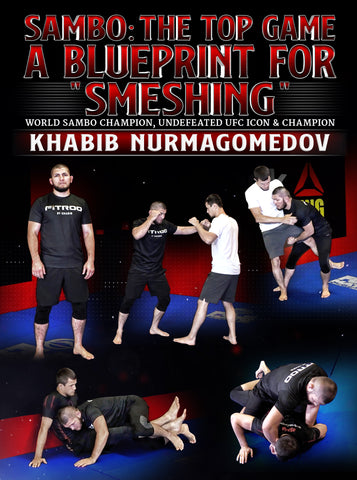
Khabib Nurmagomedov
Sambo: The Top Game
Sambo-style top control, from Khabib himself. Useful in no-gi and MMA alike.
View on BJJ Fanatics →Disclosure: affiliate links. The price is the same for you and your purchase supports BJJ-Rules.