 EN
EN FR
FR PT
PT
Some champions are admired for their medals, others are quoted for what they changed in the way people think about jiu-jitsu. Caio Terra belongs to both groups. Twelve IBJJF black belt world titles, including ten consecutive no-gi titles, a black belt earned in three years, open-weight gold medals with 57 kilos on the scale: the numbers speak for themselves. But the real story is a three-word idea, technique conquers all, and a path that begins with a bullied teenager dragged onto a Copacabana mat by his mother.
This Caio Terra profile covers everything: the childhood in Rio, the express rise to black belt, the rivalry with Bruno Malfacine, the Caio Terra Association, and where he stands in 2026, at 40, with a body marked by two decades at the top. You will also find the best-known lesson of his career, a black belt received on the podium of a loss, and what your own training can take from it.

Fact file: Caio Terra
- Full name: Caio Terra
- Born: 8 February 1986, Rio de Janeiro (Brazil)
- Nationality: Brazilian, based in California since 2008
- Division: Rooster weight (57.5 kg / 127 lbs), with many open-weight entries
- Lineage: Mitsuyo Maeda, Carlos Gracie, Reyson Gracie, Paulo Maurício Strauch, Caio Terra
- Rank: 4th degree black belt (black belt in July 2006 from Reyson Gracie and Paulo Strauch, 4th degree on 28 September 2020 from Paulo Strauch)
- Team: Caio Terra Association (CTA), founded after his move to the United States
- Academy: Caio Terra Academy, San Jose (California)
- Motto: Technique conquers all
In this article10
- Who is Caio Terra and how did he start jiu-jitsu?
- How did Caio Terra get his black belt in three years?
- Why did he receive his black belt after a loss?
- What is Caio Terra’s competition record?
- What does “Technique conquers all” mean in Caio Terra’s game?
- What is the Caio Terra Association?
- Where is Caio Terra in 2026?
- What can your own training take from Caio Terra?
- FAQ: everything about Caio Terra
- Conclusion: a champion who redefined what a black belt is worth
Who is Caio Terra and how did he start jiu-jitsu?
Caio Terra is a Brazilian jiu-jitsu competitor born in 1986 in Rio de Janeiro, two-time IBJJF gi world champion (2008, 2013) and ten-time no-gi world champion (2008 to 2017). He started jiu-jitsu as a teenager, around 2002-2003, at the Fight Zone academy in Copacabana, pushed by his mother after a series of bullying episodes at school. He weighed barely 38 kilos at the time.
A mother who joined the class so her son would stay
Caio has told the story many times, and BJJ Heroes confirms it: he did not want to be there. His mother signed him up with Rodrigo “Comprido” Medeiros and Ricardo Vieira, two multiple-time world champions, so he could learn to defend himself. When he refused to go, she joined the class herself and brought him along. She would later reach purple belt, and his brother Kim Terra became a black belt.
On the mat, the teenager got pushed around and would rather have been playing football with his friends. He stayed anyway, out of loyalty to his mother more than passion. He still reached blue belt, and that is when his coaches pushed him into his first competition. Caio did not believe in himself for a second.
A first tournament against his future lifelong rival
That first tournament was an emotional rollercoaster. After his first win, frozen by nerves, he asked his coach to pull him out of the bracket. He was sent back out. He won match after match until the final, which he narrowly lost to another teenager from Rio named Bruno Malfacine. Ten years later, the two would meet in black belt world finals, again and again.
Something clicked that day. Caio decided to train every day, twice a day. In 2004 he took silver at the Worlds as a blue belt, losing the final by a single advantage. In August 2004, after a falling-out with Ricardo Vieira, he left Fight Zone and joined the academy of master Paulo Maurício Strauch.
How did Caio Terra get his black belt in three years?
Caio Terra received his black belt in July 2006 from Reyson Gracie and Paulo Maurício Strauch, roughly three years after he truly started training. It is one of the fastest promotions ever recorded in Brazilian jiu-jitsu. The reason fits in one word: volume. He had turned his apartment into an academy.
An apartment turned into an academy
Around 2004, Caio knocked down walls at home to lay mats. His brother Kim recalls that his bedroom no longer had a bed, just a mattress laid over the mats after training. The apartment became a permanent open mat: friends, competitors like Felipe Costa, strangers dropped in to roll at any hour, sometimes late at night, and Caio always opened the door.
That laboratory explains the speed of his progress. He won everything on the local Brazilian scene at purple and brown belt, and the black belt arrived in the summer of 2006. People laughed at this team with no resident black belt instructor. Yet it was there, in a living room in Rio, that the future Caio Terra Association was born.

The IBJJF rule change in the year of his promotion
His promotion came in the very year the IBJJF introduced minimum time requirements per belt, including a mandatory year at brown before black. Caio had not met that requirement, and the federation barred him from the 2007 Brazilian Nationals. It planned to do the same at the Worlds, for him and for Bruno Malfacine, who was in the same situation, before granting both a last-minute exception. They were the last athletes allowed to compete at black belt with less than a year at brown. Today’s rules are explained in our guide to the meaning of each belt in Brazilian Jiu-Jitsu.
Why did he receive his black belt after a loss?
Caio Terra received his black belt on the podium of a lost final, in 2006, because his professor wanted him to understand one thing: the belt does not reward wins, it hands over a responsibility, the responsibility to teach. It is the episode he tells in his “Train for Life” video, which became a cult piece in the community and gave this article its title.
A frustrated brown belt and a professor who waits
As a brown belt, Caio has just won what he then considers his biggest title. He expects to be promoted, and nothing comes. Frustration eats at him, his jiu-jitsu deteriorates, he loses the desire to train. His professor watches without stepping in, then throws him a strange challenge: fight the world champion of the weight class above, with no preparation.
Caio refuses, the professor insists and registers him himself. He brings the whole academy to watch, because he knows Caio will lose and wants everyone to see it. On the day, Caio finishes second. On the podium, his instructor climbs up, unties his belt under the pretext of fixing the knot, and asks him to look down. The belt is black.
“I never trained you to become a champion”
Caio is devastated. Why now, after a loss, when there were so many days of victory when he would have been proud to receive it? His professor’s answer redefines his view of jiu-jitsu. He never trained him to become a champion: Caio did that on his own. He trained him to change people’s lives, the way jiu-jitsu changed his, and Caio’s jiu-jitsu was already helping plenty of people at the academy.
The timing was deliberate. Promoted after a big win, Caio would have believed he was being rewarded for his titles. Promoted after a loss, the message is clear: you are not a black belt because you win, you are a black belt because you are ready to teach. That line has travelled the whole jiu-jitsu world and remains the most shared quote of his career.

What is Caio Terra’s competition record?
Caio Terra holds twelve IBJJF black belt world titles: two in the gi (2008 and 2013) and ten consecutive no-gi titles, from 2008 to 2017, an all-time record at the No-Gi Worlds. Add three Pan American titles (2011 to 2013), two European titles (2014, 2015) and several American Nationals titles in the absolute, the open-weight division, at 57 kilos.
Caio Terra’s record (black belt)
- 2× IBJJF World Champion, gi (2008, 2013)
- 10× IBJJF No-Gi World Champion, consecutive (2008 to 2017), the record for the event
- 3× IBJJF Pan American Champion (2011, 2012, 2013)
- 2× IBJJF European Champion (2014, 2015)
- Absolute: American Nationals open-weight champion (2010, 2011, 2012 no-gi), IBJJF Las Vegas and British Nationals in weight and absolute
- 4× IBJJF Worlds runner-up, gi (2009, 2010, 2011, 2017), each time behind Bruno Malfacine
- Colored belts: IBJJF Worlds runner-up at blue belt (2004)
Sources: BJJ Heroes athlete profile, IBJJF, Caio Terra Association.
Malfacine vs Terra: the rooster weight rivalry
For a decade, the rooster division often came down to one duel. Bruno Malfacine, ten-time world champion, and Caio Terra met twelve times according to match databases, almost always in finals. Malfacine leads eight wins to four, often by an advantage or two points. In 2010 he won the Worlds final 3-2 on advantages. In 2013, Caio took his revenge twice: 2-0 on a sweep in the Pan final, then 4-2 in the Worlds final in Long Beach, his second gi title.
The rivalry made the lightest division one of the most followed on the circuit. It pits two styles against each other: Malfacine’s pressure and passing game against Caio’s guard, which never lets him settle. To understand how these finals are decided by two points, read our guide to point scoring in Brazilian Jiu-Jitsu.
The first rooster weight to win the absolute
What sets Caio apart from every other rooster in history is the absolute. Once in the United States, he entered the open-weight division again and again and won IBJJF gold there, including three open-weight titles at the American Nationals. He was the first rooster weight to achieve that at the highest level, and his wins opened the door for the lighter athletes who now enter the absolute without raising eyebrows, from Mikey Musumeci to Mica Galvão.

What does “Technique conquers all” mean in Caio Terra’s game?
“Technique conquers all” is Caio Terra’s motto and the principle that organizes his whole jiu-jitsu: a guard game built on understanding levers and angles rather than strength, tested successfully against opponents twenty to forty kilos heavier than him. BJJ Heroes sums up his favourite technique in two words: the guard, all guards.
A guard that refuses to be controlled
After the 2013 Pan final, Caio explained that Malfacine was not lost in his guard: he had simply never let him control him, which allowed him to keep finding good positions. That is the core of his game. His hips never stop moving, his legs rebuild the distance before the passer can settle, and the sweep or back take arrives when the opponent commits. The triangle from closed guard was his first weapon as a blue belt, before an ever richer open guard.
The philosophy comes from his size. Small, a late starter, pushed around for months, he could never rely on power. So he looked for mechanisms, levers, details, and for a long time refused any strength work to stay true to that principle. He would pay the physical price years later, as he admitted in 2026.
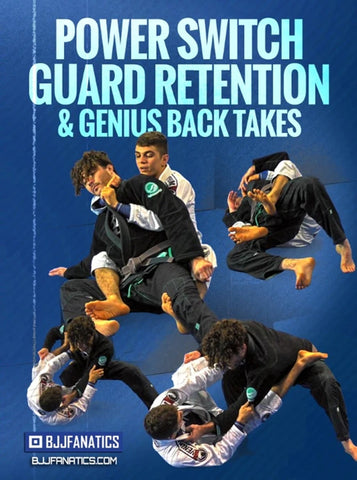
Guard retention, Caio Terra school
Caio Terra does not sell his videos on BJJ Fanatics. Mikey Musumeci, who trained in his San Jose room from 2016, did put the centrepiece of that school there: Power Switch Guard Retention and Genius Back Takes (BJJ Fanatics). Never get passed, then take the back: exactly the game described above.
Disclosure: affiliate link. The price is the same for you and your purchase supports BJJ-Rules.
An early voice against doping in jiu-jitsu
“Technique conquers all” also has a political side. Caio Terra was one of the most outspoken voices against performance-enhancing drugs in competition jiu-jitsu, at a time when the subject was taboo. BJJ Heroes considers his stance an important step towards the anti-doping testing the IBJJF enforces today. That bluntness earned him solid friendships and a few lasting grudges, and it is one reason he is often described as a divisive figure.
What is the Caio Terra Association?
The Caio Terra Association (CTA) is the network of academies Caio Terra founded after moving to the United States in 2008, headquartered at the Caio Terra Academy in San Jose, California. Its line is summed up by the motto “One team, one family” and by the belief that jiu-jitsu changes lives. It has produced world champions such as Mikey Musumeci, Yuri Simoes and Mason Fowler, now a UFC BJJ regular.
From the Cesar Gracie Academy to San Jose
Caio arrived in California in 2008 at the invitation of Cesar Gracie, who had spotted his potential. He stayed four years, until a very public split in November 2012: Cesar Gracie accused Caio of helping Carlos Condit prepare his ground game before UFC 154 against Georges St-Pierre, while Nick Diaz, a Gracie Elite member, was chasing the same welterweight title. Caio then settled in San Jose, opened his own academy and built the association that bears his name.
The CTA is selective: candidate schools are screened, dues are flat, and annual camps bring affiliates together with several world champions on the mat. Affiliated academies emphasize technique over strength and understanding over mechanical repetition, which does not stop them from producing elite competitors.

Mikey Musumeci, the most famous student
In 2016, Mikey and Tammi Musumeci left Atos to join the Caio Terra Association, explaining that it was the team closest to their values. Mikey, already a black belt, had no black belt world title yet. Under Caio, he won the 2017 and 2018 Worlds, becoming the first American to win back-to-back black belt world titles, before moving on to no-gi and UFC BJJ. His guard game, and above all his retention, carries the San Jose stamp.
Where is Caio Terra in 2026?
In 2026, Caio Terra, 40, no longer competes and devotes himself to teaching: he oversees the Caio Terra Academy in San Jose, runs the CTA, gives seminars across the United States and runs his Caio Terra Online platform, which now exceeds 1,700 videos. He stopped no-gi competition after his tenth world title in 2017, and his body carries the marks of two decades at the top.
Injuries, hip surgery and the admissions of 2026
In 2021, a serious hip injury following a car accident forced him into surgery. In late 2023 he floated a possible return to competition once fully recovered, but that return never happened. In April 2026, on The Ageless Warrior Lab podcast, he described the state of both his shoulders without flinching: fixing his hair or brushing his teeth for long hurts. He admitted having refused all strength and conditioning work during his career, in the name of technique, and now regrets it for the sake of his joints.
That admission casts his career in a new light. Technique did conquer on the mat, but the body paid the bill. For anyone training for the long haul, it is a lesson as valuable as his titles: technique first, yes, but not technique alone. Our article on improving in BJJ with two sessions a week deals with exactly that balance.
Seminars, a Rio retreat and the online platform
Caio still travels: a no-gi seminar was held on 23 July 2026 in Pennsylvania, for instance, and the Caio Terra Association has announced a training retreat in Rio de Janeiro in two sessions, from 22 November to 6 December 2026. Since 2026, his second academy in San Carlos has been handed to Bruno Ueda, a sign that Caio is delegating more. His online platform remains his main channel for teaching at a distance.
Learn directly from Caio Terra
Caio’s lessons are gathered on his own platform, Caio Terra Online: more than 1,700 videos, position-by-position courses and an iOS app. This is not an affiliate link and BJJ-Rules earns nothing from it. We share it because it is the direct source for studying his guard game.

What can your own training take from Caio Terra?
Caio Terra’s story gives four concrete lessons, valid from white belt to black: stop counting your wins in training, seek out uncomfortable situations, invest in other people’s progress, and ask whether your jiu-jitsu is good for you rather than whether you are good at jiu-jitsu. That is the central message of his video, and it has not aged.
If you are a beginner getting tapped by everyone
Caio Terra hated his first months, wanted to quit and got pushed around by the whole room. He still ended up a twelve-time world champion. The difference between those who stay and those who leave is not starting talent but the ability to accept that the first months are supposed to be hard. If you are in that phase, our guide to starting BJJ will help you get over the hump.
He also points to a specific trap: many people quit at blue belt because they are obsessed with not losing, not looking weak. That pressure turns jiu-jitsu into a source of stress instead of a tool for growth. Keeping no mental score of your sparring rounds is the first thing to change.
If you are a purple, brown or black belt
The message speaks even more directly to advanced belts. Past a certain level, jiu-jitsu can no longer be a purely personal quest: a promotion does not crown your past successes, it hands you a mission. Too many advanced practitioners keep their knowledge to themselves and never invest in beginners. For Caio, that is missing the point, and it is exactly what his own professor taught him on the podium of a loss.
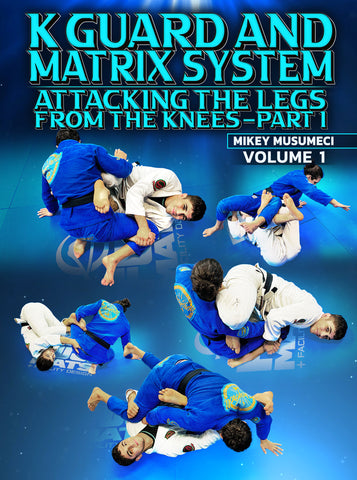
The small grappler’s guard, modern version
If “technique conquers all” speaks to you because you are light, the logical extension of the Caio Terra school is his student’s leg system: K Guard and Matrix System by Mikey Musumeci (BJJ Fanatics), built to attack heavier opponents from the guard, in gi and no-gi.
Disclosure: affiliate link. The price is the same for you and your purchase supports BJJ-Rules.
FAQ: everything about Caio Terra
Answers to the most common questions about Caio Terra: his age, his record, his black belt, his method and his team.
Who is Caio Terra?
Caio Terra is a Brazilian jiu-jitsu competitor and instructor, born on 8 February 1986 in Rio de Janeiro. A 4th degree black belt under Paulo Maurício Strauch, he is a two-time IBJJF gi world champion and ten-time no-gi world champion, and leads the Caio Terra Association from San Jose, California. His motto, “Technique conquers all”, made him a reference for smaller grapplers.
How many world titles has Caio Terra won?
Twelve IBJJF black belt world titles: two in the gi (2008 and 2013) and ten in no-gi, won consecutively from 2008 to 2017. That total of ten No-Gi Worlds is a record. He also holds three Pan American titles, two European titles and several American Nationals open-weight titles.
How old is Caio Terra?
Caio Terra was born on 8 February 1986 in Rio de Janeiro, so he is 40 in 2026. He started jiu-jitsu as a teenager, around 2002-2003, and received his black belt in July 2006, at 20.
Who gave Caio Terra his black belt?
Caio Terra received his black belt in July 2006 from Reyson Gracie and Paulo Maurício Strauch, roughly three years after he started, one of the fastest promotions in BJJ history. He received his 4th degree from Paulo Strauch on 28 September 2020. His lineage runs through Mitsuyo Maeda, Carlos Gracie and Reyson Gracie.
Why is Caio Terra considered a pioneer?
For three reasons: he was the first rooster weight (57.5 kg) to win IBJJF open-weight titles at the highest level, he was one of the first public voices against doping in jiu-jitsu, and his “Technique conquers all” method influenced a whole generation of lighter grapplers, including his student Mikey Musumeci.
Does Caio Terra still compete?
No. Caio Terra stopped no-gi competition after his tenth world title in 2017, and hip surgery in 2021 ended any idea of a comeback. In 2026 he focuses on teaching: the San Jose academy, the Caio Terra Association, seminars and the Caio Terra Online platform.
Conclusion: a champion who redefined what a black belt is worth
Caio Terra could have gone down in history as the rooster with twelve world titles and impossible wins in the absolute. He will be remembered instead as the man who received his black belt after a loss, and who understood that day that the belt does not reward a record but hands over a responsibility. Twenty years on, with a battered body and an association that produces champions, he still embodies that idea.
His motto still holds on the mat, with one caveat he added himself in 2026: technique conquers all, provided you look after the body that carries it. For more champions who marked jiu-jitsu by their method rather than their strength, browse our BJJ Legends section.
Read next:
- Roger Gracie: when simplicity becomes art
- Rafael Mendes: the greatest fight, the one against yourself
- Marcelo Garcia: a Brazilian Jiu-Jitsu legend and master of the butterfly guard

Learn from the best: our recommended instructionals
The videos we actually recommend, hand-picked from the BJJ Fanatics catalog.
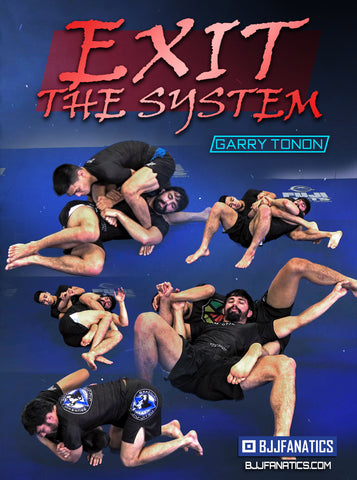
Garry Tonon
Exit The System
Escaping new-school leg attacks: the defenses from someone who knows them from the inside.
View on BJJ Fanatics →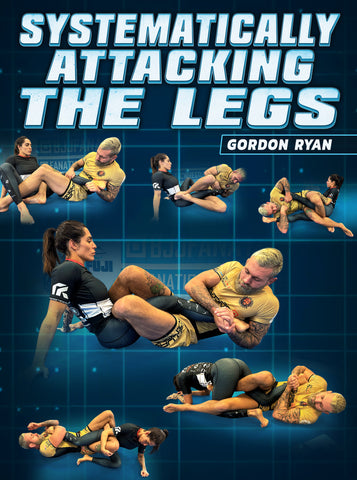
Gordon Ryan
Systematically Attacking The Legs
Gordon Ryan's leg attack system: entries, control and finishes, nothing left to chance.
View on BJJ Fanatics →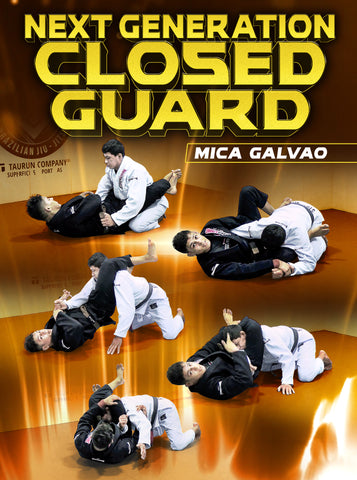
Mica Galvão
Next Generation Closed Guard
Closed guard reinvented by the Brazilian prodigy: chained attacks at competition pace.
View on BJJ Fanatics →Disclosure: affiliate links. The price is the same for you and your purchase supports BJJ-Rules.