 EN
EN FR
FR PT
PT
French grappling comes of age: Luta Livre, the Mendes school, the CFJJB… and the end of the “easy high level” myth.
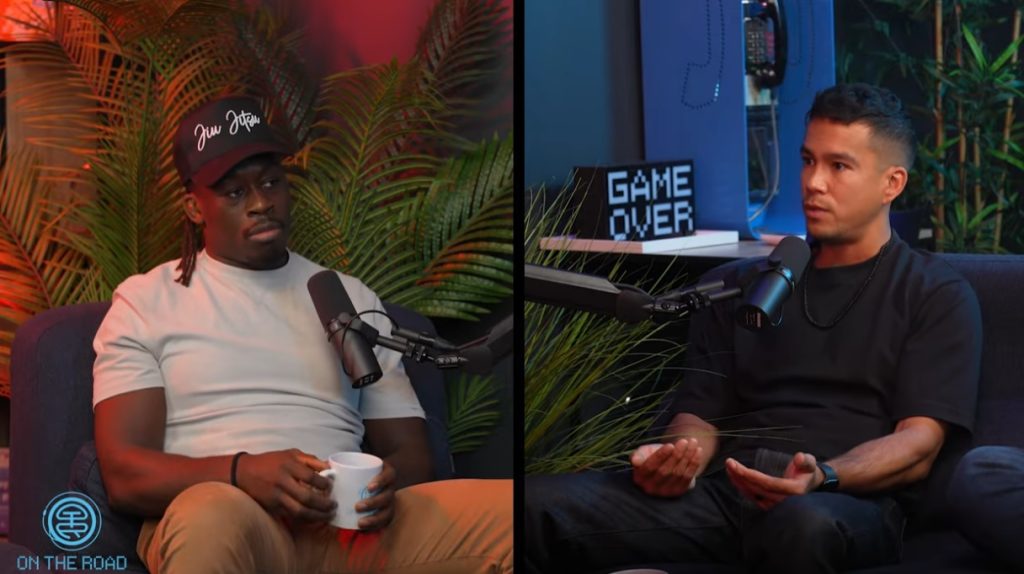
In the latest episode of the On the Road podcast, Wilfried Sam brings together two major figures of Brazilian jiu-jitsu in France: Nicolas Renier, Luta Livre pioneer, multiple ADCC qualifier, historic no-gi technician, head of NRFight, and Vincent Nguyen, teacher, referee and CFJJB instructor trainer, who came up through Urban Team before moving to the United States to train with the Mendes Brothers at the opening of Art of Jiu-Jitsu.
A rare, frank and rich discussion about how French grappling went from passionate improvisation to a real drive for structure. This two-hour episode (part one) plays like a fresco of French BJJ: transmission, memory and future. Note: the episode is in French; this article sums it up for the international community.
🎧 Listen to the full episode (2h – Part 1/2, in French)
In this article9
- 1. A table you almost never see in France
- 2. “I’d get to class with a knot in my stomach”
- 3. The era when France existed at the ADCC
- 4. California 2012: before AOJ became an empire
- 5. “Take the position first” vs “Submit right away”
- 6. The top level has no ego
- 7. The identity of French jiu-jitsu: heritage vs structure
- 8. Why this On the Road episode matters
- FAQ: French grappling on On the Road
1. A table you almost never see in France
French jiu-jitsu is often pictured as two separate worlds:
- the Luta Livre culture, no-gi, forged the old-school way;
- and the CFJJB generation, born from structured BJJ, with diplomas, refereeing and federal oversight.
Under Wilfried Sam‘s microphone, these two visions finally talk to each other without a filter. The result: a lucid snapshot of French grappling in 2025.

2. “I’d get to class with a knot in my stomach”
Vincent Nguyen: Urban Team, 2008 – baptism by fire
At 19, Vincent walks into Urban Team in Fontenay-sous-Bois. No combat sports background, but an immediate shock: intense sparring, a broken body the next day, a testosterone-heavy atmosphere.
“I’d come to class with a knot in my stomach.”
But instead of running, he stays. And above all: he discovers a calling. Very early on, almost from the start, he already sees himself teaching. That pedagogical instinct would never leave him, from California to the CFJJB.
Nicolas Renier: 12 years old, no-gi love at first sight
Nicolas discovers Luta Livre at 12, through Flavio Santiago, at a time when the gi ruled everything. He describes two worlds:
- on one side, “self-defense” classes: rigid, over-codified, always the same scenarios;
- on the other, Luta Livre: alive, rhythmic, creative, every class different, music, energy, straight-to-submission grappling.
“At 12, you want to learn how to submit people, not repeat a collar grab for a year.”
That shift would lay the foundations of a French grappling culture that isn’t just “BJJ without sleeves”.
3. The era when France existed at the ADCC
Why did the Luta Livre generation (Renier, Husson, Broche, etc.) break through?
- Because they trained no-gi every day, with the ADCC ruleset in mind and real international ambitions.
- Meanwhile, most of France was doing gi BJJ… then “taking the jacket off” once or twice a week before a no-gi competition.
- They had direct access to technical details coming from Brazil, at a time when those details barely circulated.
Vincent: “We’re the last generation that could go fight at the highest level… without truly being at the highest level.”
Nicolas, for his part, also describes the loneliness of the pioneer: no dedicated coach, few partners at his level, no staff. After his second ADCC, he finds himself literally alone on the mat: no academy, no structure around him.
“I thought I was close to the top. In truth, I was light-years away. But I did what I could with what existed in France.”
That passage marks the end of an era: the one where you could “go to the ADCC on improvisation alone”. The level has changed. The demands have changed. So has France.
4. California 2012: before AOJ became an empire
A few years later, Vincent leaves to work for Venum and settles in California, minutes away from the Mendes Brothers’ brand-new academy: Art of Jiu-Jitsu (AOJ). AOJ has just opened. Classes have ten students, not 150. Access is total.
“Today, you go to AOJ, you’ll never experience that.”
He describes the legendary Friday nights: full sessions of technical Q&A with Rafael Mendes, for over an hour. You come, you ask whatever you want, you leave with personalized solutions. He also describes the two brothers:
- Rafael Mendes: the instinctive genius. Explosive, creative, sometimes unreadable. “I’d watch him do things and not even understand what I was looking at.”
- Guilherme Mendes: the architect. Calm, methodical, surgically clear.
“For a normal person, Guilherme is easier to follow.”
Vincent insists on a point rarely spelled out: Guilherme’s true intelligence was also managing to exist next to a prodigy brother without disappearing, by becoming a strategist, a teacher, an academy builder.
5. “Take the position first” vs “Submit right away”
The podcast then tackles a key point: there is no longer just one way to teach grappling today.
The traditional BJJ approach
Positional logic: you pass the guard, you take the back, you stabilize, and only then do you attack. The idea: secure first, submit after.

The Melqui Galvão / modern Luta Livre approach
In no-gi, it’s almost the opposite. Nicolas describes what he saw (and taught) in Brazil: no-gi means “80 % straight submission”. You create the opening for the guillotine, the head-and-arm, the leg lock, instead of waiting for “the right position”.
Nicolas recalls running three intensive sessions around the head-and-arm choke / katagatame with Diogo Reis right before the ADCC, and explains that those weapons reappeared in matches a few weeks later. That’s no small detail. It shows that modern no-gi is no longer just BJJ without the kimono: it has become a teaching system in its own right, with its own priorities, timing and logic.
6. The top level has no ego
“The more weapons they have, the less chance they’ll ever be surprised.”
This may be the most striking passage of the episode.
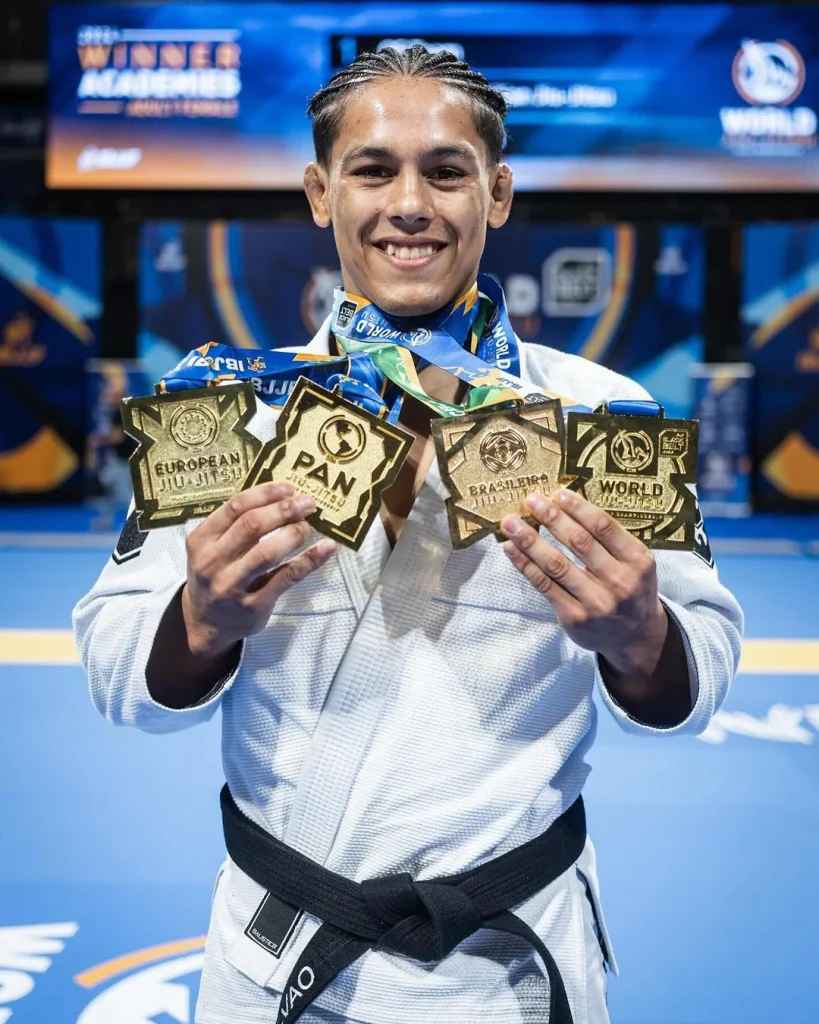
Nicolas explains that the very best don’t protect their ego, they protect their progress.
- Mica Galvão gets caught by a muscle slicer: no excuses, he says “show me”. Then he tries the exact same move on all his partners that day.
- Diogo Reis gets caught several times in a Twister / 10th Planet-style control: his reaction isn’t “that doesn’t work on me”, it’s “explain it to me again, right now”.
- In France, Nicolas finds the same attitude among the young athletes of the Unik club (Remy Marcon‘s team): they refuse to leave the mat without understanding the sequence that caught them.
- Vincent confirms: when those kids come train with him, “if I don’t stop them, they’ll keep asking me questions until midnight”.
That availability to learn, immediately, without status or ego, is described as the trademark of the new elite. It’s also a cultural break from “old French grappling”, where a national title was sometimes enough to self-proclaim as “high level”.
7. The identity of French jiu-jitsu: heritage vs structure
The end of the episode drifts toward another topic: how do you organize jiu-jitsu in France without losing its soul?
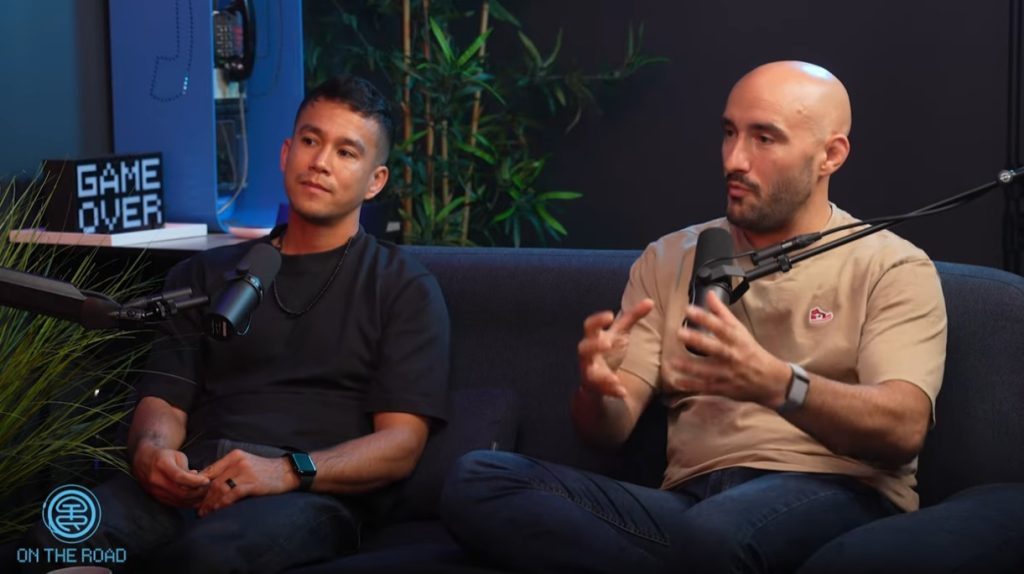
Nicolas Renier’s point
Nicolas defends preserving Luta Livre as a culture in its own right. For him, saying “it’s all grappling, it’s the same” isn’t enough. The name matters.
“If nobody says ‘Luta Livre’, the day the word disappears, the rank disappears with it.”
For him, erasing the word means erasing a history, masters, a technical lineage.
Vincent Nguyen’s point
Vincent voices a mirror concern on the BJJ side: if tomorrow a bigger federation decides “grappling is ours now”, what remains of the Brazilian identity of jiu-jitsu in France? In other words: how do you structure without absorbing? How do you professionalize without flattening everything?
That debate naturally leads to diplomas, the role of the CFJJB, the potential place of France Judo, and the political stakes around official delegation. That’s the heart of part two of the episode.
8. Why this On the Road episode matters
This episode of On the Road is more than a conversation between two veterans. It’s the meeting between:
- the self-taught Luta Livre generation, born in pure no-gi,
- and the CFJJB generation, pushing toward structure (refereeing, instructor training, legal framework).
You hear both the recent history of French grappling and its projection into the future. And above all: you hear two different approaches agreeing to exist at the same table, much to the delight of BJJ-Rules!
FAQ: French grappling on On the Road
Who are the guests of this On the Road episode?
Wilfried Sam welcomes Nicolas Renier, Luta Livre pioneer in France, multiple ADCC qualifier and founder of the NRFight club, and Vincent Nguyen, teacher, referee and CFJJB instructor trainer, who trained at the Mendes Brothers’ Art of Jiu-Jitsu academy in California.
What’s the difference between traditional BJJ and modern no-gi?
According to the episode, traditional BJJ follows a positional logic: pass the guard, stabilize, then attack. Modern no-gi, inherited from Luta Livre and schools like Melqui Galvão’s, instead favors direct submission, creating the opening without waiting for the perfect position. They are two teaching systems in their own right.
Where can I listen to this On the Road episode?
The episode is available in two parts on YouTube and on the usual podcast platforms (including Deezer), in French. Part one covers the history of French grappling, part two the institutional debate between the CFJJB and France Judo.
🎧 Full episode available on Wilfried Sam’s On the Road podcast (in French).
Learn from the best: our recommended instructionals
The videos we actually recommend, hand-picked from the BJJ Fanatics catalog.

Jozef Chen
Engaging Without Regrets
How to engage and take the initiative in no-gi: the method of one of the most studied young grapplers on the circuit.
View on BJJ Fanatics →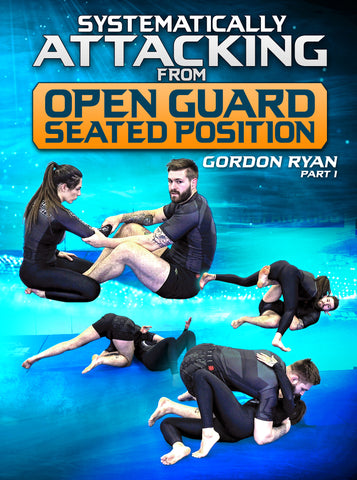
Gordon Ryan
Systematically Attacking From Open Guard: Seated Position
Gordon Ryan's seated no-gi guard: sweeps, leg entries and back takes, as a system.
View on BJJ Fanatics →
Georges St-Pierre
Mixed Martial Arts Fundamentals
MMA fundamentals from GSP: distance, takedowns, control. To understand jiu-jitsu when strikes are involved.
View on BJJ Fanatics →Disclosure: affiliate links. The price is the same for you and your purchase supports BJJ-Rules.