 EN
EN FR
FR PT
PT
In part two of the On the Road podcast, Wilfried Sam shifts the discussion with Nicolas Renier and Vincent Nguyen onto institutional ground: CFJJB vs France Judo, belt equivalences, the identity of BJJ and Luta Livre.
After part one, which explored the technical evolution of French grappling, this sequel tackles the split and its consequences for the sport’s future. A rare, direct and necessary exchange. Note: the episode is in French; this article sums it up for the international community.
🎧 Listen to the full episode (Part 2/2, in French)
In this article10
- 1. When the debate turns political
- 2. CFJJB vs France Judo: anatomy of a split
- 3. Nicolas meets France Judo: the other side of the story
- 4. Judo black belt ≠ BJJ blue belt: a needed clarification
- 5. Luta Livre: Nicolas hits hard
- 6. The CFJJB under fire: answering the critics
- 7. Communication and dialogue: beyond “bar talk”
- 8. The future of French grappling: two complementary visions
- FAQ: the CFJJB, France Judo and belts
- Conclusion: growing without self-denial
1. When the debate turns political
A simple question, a major issue: why did the CFJJB leave France Judo?
If part one explored memory and technique, this second half changes register entirely. We enter the institutional debate that has stirred the community for weeks: who carries the identity of BJJ in France, and on what terms? Wilfried Sam asks the questions nobody dares ask publicly. Nicolas Renier and Vincent Nguyen answer head-on!
2. CFJJB vs France Judo: anatomy of a split
2021: the agreement that was meant to change everything
Vincent Nguyen retraces the history. In 2021, the CFJJB leaves the FFST (a workers’ sport federation that brought little) and signs an agreement with France Judo guaranteeing autonomy and independence.
The idea: benefit from infrastructure (venues, political reach) and structuring tools (notably the CQP diploma to professionalize teaching) without touching the identity of Brazilian jiu-jitsu. Vincent sums up the balance sought: as long as the trade-off remains financial and the sport’s identity is preserved, the collaboration makes sense.
April 2024: the brutal turning point
In April 2024, France Judo offers David Giorsetti the role of general director of jujitsu. The mission: use the methods behind the CFJJB’s growth to structure all “jujitsu” disciplines (judo jujitsu, duo fighting, etc.).
But according to Vincent, decisions are made very quickly without consulting David, or even informing him beforehand. Among them:
- A belt equivalence between judo and “jujitsu” (all disciplines lumped together)
- A single “jujitsu” diploma no longer distinguishing Brazilian jiu-jitsu
- The possibility for a judo jujitsu teacher to teach BJJ without specific training
For Vincent, these decisions amount to denying the singularity of Brazilian jiu-jitsu as a distinct international discipline, with its own belt system, rules and history. Accepting that means accepting to dilute the sport’s identity into a generic “jujitsu family”.

Faced with these imposed decisions, David Giorsetti chooses to leave France Judo. Vincent explains that this choice was personally less comfortable for David, but that he had a responsibility toward the BJJ community, which expected him to defend the sport’s identity.
The CFJJB then joins the ASPTT, a delegated federation that guarantees its independence and lets it keep issuing diplomas such as the CQP.
Two readings of the split: Vincent sees a necessary choice to protect BJJ’s identity. Nicolas thinks it might have been wiser to stay inside and negotiate, given France Judo’s political weight.
3. Nicolas meets France Judo: the other side of the story
Nicolas Renier holds a unique position in this debate: outside both structures, he was nonetheless invited by David Inquel, vice-president of France Judo, to talk after publishing videos on the subject.
What he learned from that exchange
According to Nicolas, France Judo plans to separate judo and jujitsu ranks as of March 2025 (or it may already be done). David Inquel reportedly explained wanting to preserve the difference between the sports, acknowledging that an automatic one-way equivalence would not be fair.
The reported argument: a BJJ practitioner couldn’t become a judo black belt in a few weekends, so why would the reverse be acceptable?
Nicolas’s strategic take
Despite those discussions, he remains convinced that France Judo holds the political power. From the outside, he believes it might have been more strategic to stay inside and negotiate step by step, rather than leaving entirely.
Vincent replies that this strategy would have been ideal, but simply wasn’t possible given the decisions taken without consultation. David could not stay in a structure where he no longer had a say on matters fundamental to the sport’s identity.
The communication question
Nicolas also uses the podcast to criticize the CFJJB’s communication around the split: a simple Instagram message pointing to a letter on the website, with no real, structured public statement.
He believes practitioners need to clearly understand what happened and what David Giorsetti’s project for the future is, in order to take a position knowingly.
Vincent hears the criticism but nuances it: the CFJJB is made of mat people, not communicators. Swamped by structural work (training programs, competitions, development), they prefer acting to spending their time managing controversies on social media.
4. Judo black belt ≠ BJJ blue belt: a needed clarification
A rumor keeps circulating: “The CFJJB considers a judo black belt equal to a BJJ blue belt.” Vincent clarifies: that’s false.
What the rulebooks actually say
The CFJJB and IBJJF rulebooks state that a judo black belt cannot compete as a white belt in a Brazilian jiu-jitsu competition. It’s a safety measure: preventing an experienced judoka from injuring a complete beginner who can neither fall nor defend on the ground.
But that does not mean a BJJ rank is automatically granted. In the academy, a judo black belt starts as a BJJ white belt and progresses normally, based on their Brazilian jiu-jitsu teacher’s assessment.
CAF vs CQP: two diplomas, two logics
Vincent then explains the difference between the two teaching diplomas. CAF (federal instructor certificate) is accessible from blue belt and allows volunteer teaching. The goal: letting relatively recent practitioners assist their teacher, open a small program where none exists, or run kids’ classes. The person wears their blue belt, so their level is immediately visible.
CQP (professional qualification certificate) is accessible from brown belt (around 8 years of training) and allows professional, paid teaching. The difference is clear: the first is volunteering with a visible level, without competing against professionals. Second is a real recognition of expertise after years on the mats.
The core issue: preserving the singularity of Brazilian jiu-jitsu as a discipline with its own progression and teaching criteria, without standardization with other “jujitsu” disciplines.
5. Luta Livre: Nicolas hits hard
The podcast then returns to Luta Livre, and Nicolas Renier doesn’t mince his words.
Why so few French representatives?
Wilfried asks the question: why is Nicolas nearly the only one in France to openly claim Luta Livre today?
The answer pulls no punches: those who dropped the name “Luta Livre” for “grappling” or other generic terms are, in his words, cowards who jumped ship for convenience. He even goes as far as saying they have no honor.
His argument: if everyone abandons the name, the ranks end up worthless. Abandoning the cultural and technical identity of Luta Livre means collectively shooting yourself in the foot.
The mentorship: 55 clubs, 150-teacher goal
Facing that reality, Nicolas built a mentorship program for Luta Livre teachers, isolated or up-and-coming. Not a state diploma, but premium coaching offering a full teaching methodology (inspired by what he saw in Brazil and the United States), a belt-by-belt technical curriculum, regular exchanges between teachers, and rank tracking.
Today, 55 clubs are on board. The goal: 150 teachers trained in 3 years. Vincent salutes the initiative, noting teachers do need support, not only on technique but also on growing their club (acquiring and retaining students).

6. The CFJJB under fire: answering the critics
Wilfried gathered the most frequent criticisms of the CFJJB from social media. He puts them to Vincent in a true/false format.
True or false: “The CFJJB is a mafia”
Vincent dismantles the accusation by explaining that the CFJJB does have a high quality standard and a strong national presence (competitions every weekend across France), which can give the impression of crushing smaller organizations.
But he insists: the doors are open to anyone willing to contribute their skills. He himself started by offering his services without asking for anything in return. The problem is that many criticize from the outside without ever offering help.
True or false: “You’re getting rich”
Vincent points out that the CFJJB is an institution with an auditor and a strict legal framework. Personal enrichment of its leaders is impossible without oversight.
He reframes the real question: why do competitions cost what they cost? And he compares with the IBJJF (130 € for gi, around 200 € for gi + no-gi) versus the CFJJB (50 € for one discipline, 90 € for both, 30 € for kids).
The costs are explained: quality refereeing (training, travel, pay to keep the best referees), venue rental, medals, logistics staff. Vincent notably insists that kids are refereed by people who officiate at the world championships: that level of standards has a price.
True or false: “The CFJJB is misogynistic”
Vincent lists concrete initiatives: women’s open mats, full prize equality between men and women, a commission dedicated to promoting women’s practice, and Laurence Cousin (world champion) taking part in the national tryouts.
He acknowledges there are still too few women in the selections, but explains it reflects a practice currently dominated overwhelmingly by men. The challenge: first grow women’s practice at the recreational level, so that more high-level competitors emerge later.
True or false: “You favor Infinity”
Vincent dismantles this accusation with an airtight argument: he heads refereeing, and his own collective (WAO) competes directly with Infinity. Why would he favor a competitor?
And above all: Mathias Jardin, who works for Infinity, is the national team’s head coach. Yet no Infinity member appears in the national selection. If favoritism existed, that would be the perfect moment to exercise it.
The underlying message: beyond social media controversies, Vincent calls on those with constructive criticism to come discuss it directly, and above all to contribute rather than criticize from afar.
7. Communication and dialogue: beyond “bar talk”
The debate returns to the importance of communication and direct dialogue. Nicolas insists practitioners need to clearly understand the situation and the project carried by the CFJJB to take an informed position.
Vincent replies that he’d rather spend his time moving things forward than answering baseless criticism on social media. On the other hand, when someone comes to him directly, he takes the time to explain, and most of the time, people understand.
Nicolas Renier concludes that even if it’s “bar talk”, these are also BJJ practitioners who deserve to be heard.

8. The future of French grappling: two complementary visions
To close, Wilfried asks Nicolas and Vincent how they see the future of French grappling.
Nicolas: the mat as a unique social space
Nicolas delivers a vibrant plea for Brazilian jiu-jitsu and Luta Livre as unmatched spaces of social mixing. On the mat, a lawyer trains with someone unemployed, a student with a doctor. All social backgrounds, all skin colors, all religions meet and progress together.
He also stresses the sport’s educational values: learning to never give up, even in the worst positions, escaping uncomfortable situations through technique and mental resilience. His hope: that one day, BJJ and Luta Livre work together, perhaps within the same federation, while preserving their respective identities.
Vincent: training the coming generation
Vincent looks toward the sporting and educational future. He sees a bright horizon when he observes the remarkable work clubs are doing with young people. For him, producing champions starts with quality training from childhood.
He also insists on training future teachers, who will be the discipline’s best ambassadors. The stakes are high: what will these new instructors pass on? His ambition: making Brazilian jiu-jitsu the most practiced combat sport in the world.
He ends on a philosophical note borrowed from jiu-jitsu: a smaller one can beat a bigger one. In the same way, a smaller organization can win against a bigger one if it works intelligently.
FAQ: the CFJJB, France Judo and belts
Why did the CFJJB leave France Judo?
According to Vincent Nguyen on the podcast, the 2021 agreement guaranteed the CFJJB’s autonomy. In April 2024, decisions made without consultation (judo/jujitsu belt equivalence, a single diploma, teaching BJJ without specific training) challenged the identity of Brazilian jiu-jitsu. David Giorsetti then left France Judo and the CFJJB joined the ASPTT.
Is a judo black belt equal to a BJJ blue belt?
No. The CFJJB and IBJJF rulebooks only prevent a judo black belt from competing as a white belt in BJJ competition, for safety reasons. In the academy, a judoka starts as a white belt and progresses normally, based on their Brazilian jiu-jitsu teacher’s assessment.
What’s the difference between the CAF and the CQP?
The CAF (federal instructor certificate) is accessible from blue belt and allows volunteer teaching, for instance assisting a teacher or running kids’ classes. The CQP (professional qualification certificate) is accessible from brown belt and allows paid, professional teaching.
Conclusion: growing without self-denial
This second part of the On the Road podcast tackles the touchy subjects head-on: institutional split, the identity of the disciplines, public criticism, visions for the future.
What emerges: two visions that complement rather than oppose each other. Nicolas and Vincent share the same goal: growing French grappling without denaturing what makes it unique. French grappling is at a turning point. What comes next will depend on everyone’s ability to keep the dialogue going, on the mat and off it.
🎧 Listen to the full episode (Part 2/2, in French)
Learn from the best: our recommended instructionals
The videos we actually recommend, hand-picked from the BJJ Fanatics catalog.

Adam Wardzinski
Octopus Guard Engineering
Octopus guard taken apart piece by piece: sweeps, back takes, transitions to butterfly.
View on BJJ Fanatics →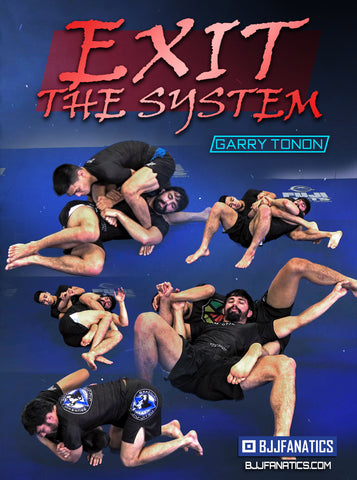
Garry Tonon
Exit The System
Escaping new-school leg attacks: the defenses from someone who knows them from the inside.
View on BJJ Fanatics →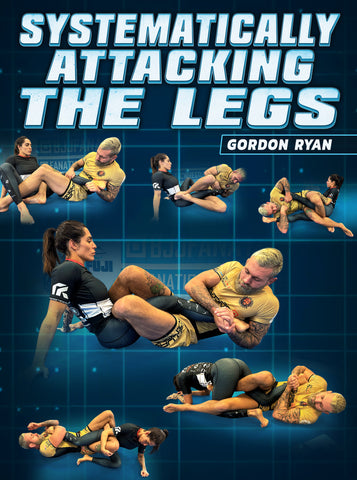
Gordon Ryan
Systematically Attacking The Legs
Gordon Ryan's leg attack system: entries, control and finishes, nothing left to chance.
View on BJJ Fanatics →Disclosure: affiliate links. The price is the same for you and your purchase supports BJJ-Rules.