 EN
EN FR
FR PT
PT
Everyone knew the plan: take it to the ground, pass, mount, choke. Nobody could stop it. Ten IBJJF world titles, an ADCC won with eight submissions in eight matches, an MMA championship, and a 2017 farewell on a white-belt finish against the most decorated champion of the next generation. A profile of Roger Gracie, the man who turned simplicity into an art.
Rio de Janeiro, 23 July 2017. Inside the Arena Carioca 1, Marcus “Buchecha” Almeida, 13 world titles, steps up to face Roger Gracie, 36, out of retirement for one last night. The stands are full of black belts. No trash talk, no theatrics. For six minutes Buchecha pushes the pace and Roger barely moves: he shifts the pressure, eats the space, passes, mounts. Then he opens the lapel. Lapel choke from mount, Buchecha taps at 6:52. Moments later, microphone in hand, Roger announces he is done. He leaves the mat on the purest image of his jiu-jitsu.
This Roger Gracie profile follows the thread: a childhood in jiu-jitsu’s most famous family, the London exile that forged his style, the reign from 2004 to 2010, the MMA chapter up to the ONE Championship title, the 2017 match and the legacy of a man whom John Danaher, Georges St-Pierre and much of the circuit place at the very top of gi history.

In this article10
- Roger Gracie at a glance
- Who is Roger Gracie and where does he come from?
- Why did Roger Gracie build his jiu-jitsu in London?
- What is Roger Gracie’s competition record?
- What is Roger Gracie’s style?
- Roger Gracie in MMA: jiu-jitsu adapted, not transformed
- Roger Gracie vs Buchecha: the final match of 2017
- What legacy does Roger Gracie leave to jiu-jitsu?
- FAQ: Roger Gracie
- Conclusion: Roger Gracie’s mark
Roger Gracie at a glance
Fact file
- Full name: Roger Gracie Gomes
- Born: 26 September 1981, Rio de Janeiro (Brazil)
- Nationality: Brazilian, based in London since the early 2000s
- Family: grandson of Carlos Gracie, son of Reila Gracie and Maurício “Maurição” Gomes
- Division: super heavyweight (100.5 kg), open-weight winner
- Lineage: Carlos Gracie, Helio Gracie, Carlos Gracie Jr, Roger Gracie
- Rank: black belt in 2004, from Carlos Gracie Jr
- Teams: Gracie Barra, then Roger Gracie Academy (London)
- Favourite technique: cross choke from mount
- Status: retired from competition since July 2017, runs the Roger Gracie Academy
Sources: BJJ Heroes, IBJJF, Roger Gracie Academy. Last checked: October 2026.
Who is Roger Gracie and where does he come from?
Roger Gracie is a Brazilian jiu-jitsu competitor born on 26 September 1981 in Rio de Janeiro, grandson of Carlos Gracie, the founder of Brazilian jiu-jitsu. He is a ten-time IBJJF black belt world champion, double ADCC champion in 2005 and former ONE Championship light heavyweight champion in MMA. His particularity within the family: he carries the name through his mother, Reila Gracie.
A name chosen for its letter
The first name is no accident. Reila Gracie has told how her father Carlos believed in the power of names starting with R, supposed to bring strength and charisma: Rolls, Rickson, Royler, Renzo, Ryan, Roger. Her own name, Reila, was already a Carlos invention. Roger’s father, Maurício Motta Gomes, was a feared competitor of the 1970s and 1980s, a black belt under Rolls Gracie and one of the first to establish Brazilian jiu-jitsu in the United Kingdom.

As a child, Roger was surrounded by jiu-jitsu without truly committing to it. Meals, weekends and conversations revolved around the mat, but he remained a spectator for a long time. Rio in the 1990s was boiling: Gracie Barra and Carlson Gracie clashed in competition and sometimes in the street, and black belts were heroes to the kids. Roger watched and absorbed, but did not train seriously until his late teens.
The turning point in southern Brazil
The switch came as a teenager, during holidays spent with his uncle Rilion Gracie in southern Brazil. Roger was somewhat out of shape. Rilion pushed him to train every day, watch his diet and live like an athlete. After five weeks the seed was planted: jiu-jitsu stopped being a family pastime and became a personal commitment. He returned to Rio transformed, lighter, training more regularly, and started aiming at competition.
Why did Roger Gracie build his jiu-jitsu in London?
Roger Gracie left Rio for London around the turn of the 2000s, after an incident with the police that his family judged serious enough to move him away from bad company. He joined his father there and developed a jiu-jitsu that ran against the grain: with no high-level partners on a daily basis, he repeated the same fundamentals to perfection. That is where his style comes from.
An almost empty environment
London in the early 2000s had only a handful of Brazilian jiu-jitsu clubs, and the European community was tiny: isolated Brazilian instructors in England, France, Spain and Scandinavia, competitions in modest gyms where gathering fifty entrants was an achievement. His only international-calibre partner was Braulio Estima, two hours’ drive away. Most of the time, Roger trained with his own students.

He has explained it himself: he developed his basics so well precisely because he did not have champions on hand every day. He had to repeat the techniques he knew over and over until he had mastered them completely. Teaching early also forced him to break down every detail: how to explain a transition, correct a posture, anticipate a reaction. That precision work, rather than chasing novelties, became his trademark.
Coloured belts: three world titles in three years
Still connected to Gracie Barra Rio, Roger flew back and forth to test himself. He was IBJJF world champion at blue belt in 2000, purple in 2001 and brown in 2002, the year he doubled up in weight and absolute. Trips were long, budgets tight, every journey a gamble. But the style was already there: control, methodical pressure, and the ability to keep it simple when others got lost in variety. In 2004, Carlos Gracie Jr awarded him the black belt. For context, read our guide to the meaning of each belt in Brazilian Jiu-Jitsu.

What is Roger Gracie’s competition record?
Roger Gracie holds ten IBJJF black belt world titles, won from 2004 to 2010: seven in his super heavyweight division and three in the absolute (2007, 2009, 2010). He also doubled up at the ADCC 2005, weight and absolute, submitting all eight opponents, a feat never matched. His black belt record: 76 wins, 7 losses, never submitted.
Roger Gracie’s record (black belt)
| IBJJF Worlds, super heavyweight | 2004, 2005, 2006, 2007, 2008, 2009, 2010 |
| IBJJF Worlds, absolute | 2007, 2009, 2010 (silver in 2004, 2005 and 2008) |
| ADCC | 2005, weight and absolute, 8 submissions in 8 matches; 2007 superfight |
| IBJJF European Open | 2005, weight and absolute |
| IBJJF Pan American | 2006, absolute |
| Coloured belts | World champion at blue (2000), purple (2001) and brown (2002, double gold) |
| Black belt record | 76 wins, 7 losses, never submitted |
| Wins by submission | 62 (82%), including 29 chokes from the back, 19 cross chokes, 16 armbars |
| MMA | 8 wins, 2 losses; ONE Championship light heavyweight champion (2016) |
Source: BJJ Heroes (profile and match history), checked in October 2026.
2004: first title and Jacaré’s arm
First year at black belt, first world title at super heavyweight. In the absolute final he faced Ronaldo “Jacaré” Souza. Roger locked in an armbar, Jacaré refused to tap, broke his arm, escaped and held his points lead to the end. The crowd was torn between admiration for Jacaré’s courage and unease. Roger, for his part, mostly remembered reaching the final at his first attempt.
2005: the perfect ADCC
At ADCC 2005, Roger produced the cleanest run in the event’s history: eight matches, eight submissions, winning his division and the absolute. In the absolute final he avenged himself on Jacaré with a rear naked choke. No other athlete has ever gone through a full ADCC, weight and absolute, submitting everyone. The same year he won the Worlds in his division, took silver in the absolute and doubled up at the European Open.
2006 to 2010: the reign
At the 2006 Pan he lost on points to Xande Ribeiro at super heavyweight, then submitted him by triangle in under a minute in the absolute final a few hours later. That is Roger in a nutshell: patient in defeat, merciless in the rematch. In 2007 he scored his first black belt double at the Worlds and won the ADCC superfight against Jon Olav Einemo. In 2008 he kept his division and narrowly lost the absolute final to Xande.
The 2009 Worlds were his masterpiece: double gold in weight and absolute, with every final won by cross choke from mount, the same sequence applied to elite opponents who knew exactly what was coming. In 2010, at his last Worlds, he doubled up again: a win over Ricardo Abreu at super heavyweight, and the absolute title by walkover when Romulo Barral withdrew injured. He left the IBJJF stage on seven consecutive division titles. To understand how those finals are decided, read our guide to point scoring in Brazilian Jiu-Jitsu.

What is Roger Gracie’s style?
Roger Gracie’s style fits in one sequence every opponent knew: take it to the ground, pass the guard, take mount, finish with a cross choke or an armbar. His strength is not surprise but certainty: clinical precision, control of timing and a total absence of haste that made the sequence inevitable even when announced. His favourite technique, according to BJJ Heroes, remains the cross choke from mount.
Mount as the point of no return
Roger summed it up in an often-quoted line: the basics are the most important part of your game, and if you let him take mount, it will be very hard to escape. His mount is not a transit position but a cage: weight on the sternum, knees high, heavy hips, and hands working the collar while the opponent burns energy trying not to be turned. The cross choke then arrives as a conclusion, not an attack. Nineteen of his sixty-two black belt submissions are cross chokes, and twenty-nine are chokes from the back, often obtained when the opponent turns to flee the mount.

Go Further Faster, by John Danaher
Roger Gracie does not sell an instructional on BJJ Fanatics. To work on what he embodies, gi fundamentals pushed to perfection, the closest series in spirit is John Danaher’s: mount, pins, escapes, passing, in eight volumes.
View the instructionalDisclosure: affiliate link. The price is the same for you and your purchase supports BJJ-Rules.
Closed guard as a trap
Many see closed guard as a waiting position. Roger uses it as a trap. When the opponent inserts a knee to open it, he drives his hips upward combined with inward knee pressure that unbalances and reverses. No brute force, just timing and an angle. That attention to detail, hip alignment, placement of the opposite hand, reading the opponent’s intention, is what separates a white-belt move from a near-infallible weapon.
The armbar from mount, the universal weapon
If the cross choke remains his most famous gi finish, the armbar from mount is the tool he carried everywhere: gi, no-gi, ADCC, MMA. He locks the elbow against his torso as soon as he grabs the arm, which rules out any escape, and anticipates the classic attempt to trap his leg in half guard. The power comes from body structure, not muscle, which explains why he could repeat the pattern against younger, more explosive and sometimes heavier opponents.
Among the fundamentalists of jiu-jitsu, Roger stands out for applying the same sequence to every style. Where Marcelo Garcia builds a game of movement and back takes, Roger establishes a position, locks it and moves forward with no way back. It is also what makes his style so rare today: it demands a patience that runs against a modern competition scene geared towards speed, berimbolos and the 50/50. Where many seek surprise, he seeks certainty.
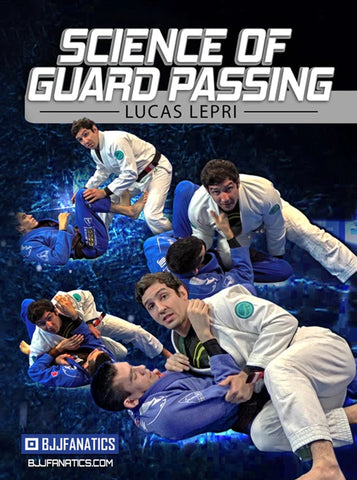
The Science of Guard Passing, by Lucas Lepri
Before the mount comes the pass. The pressure gi passing Roger practised is taught with the same logic by Lucas Lepri, a multiple-time world champion: posture, hip control, then the dominant position, without rushing.
View the instructionalDisclosure: affiliate link. The price is the same for you and your purchase supports BJJ-Rules.
Roger Gracie in MMA: jiu-jitsu adapted, not transformed
Roger Gracie fought ten professional MMA bouts between 2006 and 2016, for eight wins and two losses, and won the ONE Championship light heavyweight title in 2016 against Michal Pasternak before closing that chapter. His approach never changed: take it down, control, submit, with the added management of strikes and the clinch against the cage.
From Bodog to ONE Championship
In 2006, at the top of jiu-jitsu, Roger joined Team Black House, home of Anderson Silva, Lyoto Machida and the Nogueira brothers. He debuted at Bodog Fight and submitted wrestler Ron Waterman with a kimura. In 2010, in Strikeforce, he submitted Kevin Randleman, a former UFC champion and explosive wrestler, with an arm-triangle. In 2011 he lost on points to Muhammed “King Mo” Lawal, the Strikeforce champion, then in 2013 had a short UFC spell that ended with a loss to Tim Kennedy.
The last chapter is the best. In May 2016 he faced Michal Pasternak for the ONE Championship light heavyweight title and submitted him with a rear naked choke in the first round, after a perfectly executed body lock. Roger became an MMA champion and left the cage on that title. His MMA chapter proves that classic jiu-jitsu, without frills, remains formidable when executed to perfection and adapted to strikes.
Roger Gracie vs Buchecha: the final match of 2017
On 23 July 2017, at the Gracie Pro organised by Kyra Gracie at the Arena Carioca 1 in Rio, Roger Gracie, 36 and retired from the IBJJF since 2010, submitted Marcus “Buchecha” Almeida, 13-time world champion, with a lapel choke from mount at 6:52. He announced his definitive retirement right after. The match answered a question the whole circuit was asking: can simplicity executed to perfection still beat the era of endless chains?
Metamoris 2012, the first act
The two had already met in 2012 in Los Angeles, at Metamoris 1, in a twenty-minute submission-only format. Buchecha was only 22, with two years at black belt but already an impressive record. That day he became the first to land a takedown on Roger, who answered with a sweep. A draw after twenty minutes, each having withstood the other’s attacks. The idea of a generational rivalry was born: Buchecha’s explosive youth against Roger’s icy mastery.

Rio 2017, the last word
Five years later, the arena hums but stays respectful. The first grips are a battle of centimetres: a collar, a sleeve, a step forward. Buchecha tries to drown Roger in pace. Roger barely moves: he shifts the pressure, and every micro-adjustment eats away the space. Then the signature sequence unfolds, neutralise, pass, stabilise, mount. He opens the lapel. The crowd understands before the referee’s hand: the pressure runs from the sternum to the collar, the breath shortens, the defence crumbles. Buchecha taps.

Moments later, Roger takes the microphone, says thank you, barely smiles and announces his retirement. No staging. The symbol is powerful: he leaves competition at the top, on the most classic finish in the gi, against the most decorated champion of the next generation. The footage racked up millions of views and reopened the same debate in every club: fundamentals pushed to perfection versus constant innovation. That night, the answer was clear.
What legacy does Roger Gracie leave to jiu-jitsu?
Roger Gracie’s legacy goes beyond his ten titles: he proved that a jiu-jitsu reduced to its fundamentals could dominate the highest level for seven years, he made London a major centre of European grappling with the Roger Gracie Academy and its affiliates around the world, and he remains the reference quoted by teachers of the “why before the how”. In the greatest-of-all-time debate in the gi, his name comes up alongside Marcelo Garcia’s, just as Caio Terra‘s does among the lighter weights.
A pioneer of European jiu-jitsu
When Roger settled in London, Brazilian jiu-jitsu was a niche in Europe. Twenty years on, the Roger Gracie Academy in Ladbroke Grove is one of the best-known academies on the continent, with a network of affiliated schools, and the British capital has become a hub of international grappling. His school does not only produce competitors: it trains instructors and spreads a teaching approach built on clear fundamentals, posture, pressure and patience before any variation. To measure how far Europe has come, see our article on why Brazilian Jiu-Jitsu is booming in France.

The model for today’s champions
Roger is not nostalgic. He acknowledges the value of modern positions and technical exploration, but reminds everyone that without structure they lose their effectiveness against a solid defence. That is the lesson the champions who cite him take away: basics pushed to perfection beat disorganised creativity. Georges St-Pierre, who has rolled with him as he has with Gordon Ryan, ranks him among the best partners he has ever had. Unlike other jiu-jitsu figures, Roger never sought controversy: he lets his results and those of his students speak.

FAQ: Roger Gracie
How many world titles has Roger Gracie won? Ten IBJJF black belt world titles, from 2004 to 2010: seven at super heavyweight (2004 to 2010) and three in the absolute (2007, 2009, 2010). He was also world champion at blue belt (2000), purple (2001) and brown (2002), and double ADCC champion in 2005.
How old is Roger Gracie? Roger Gracie was born on 26 September 1981 in Rio de Janeiro. He is 45 in 2026. He received his black belt in 2004, at 22, and fought his last match in July 2017, at 35.
Has Roger Gracie ever been submitted in competition? No. According to the BJJ Heroes match history, all seven of his black belt losses came on points or advantages. He submitted 62 of the 76 opponents he beat, 82%, mainly by choke from the back, cross choke and armbar.
Did Roger Gracie fight MMA? Yes, ten bouts between 2006 and 2016 for a record of 8 wins and 2 losses. He submitted Ron Waterman and Kevin Randleman, lost to King Mo Lawal and Tim Kennedy, then won the ONE Championship light heavyweight title in 2016 against Michal Pasternak before retiring.
Who won between Roger Gracie and Buchecha? Their first match, at Metamoris 1 in 2012, ended in a draw after twenty minutes. The second, at Gracie Pro on 23 July 2017 in Rio, was won by Roger Gracie with a lapel choke from mount at 6:52. He announced his retirement right after.
What does Roger Gracie do today? Retired from competition since 2017, he runs the Roger Gracie Academy in London, headquarters of a network of affiliated academies worldwide, gives seminars and trains instructors. He and his father Maurício Gomes made London one of the centres of European jiu-jitsu.
Conclusion: Roger Gracie’s mark
In a sport where technical fashions change fast, Roger Gracie will remain the embodiment of a timeless truth: fundamentals executed to perfection never go out of style. His career proves you do not need to reinvent jiu-jitsu in every match to dominate the highest level. Ten world titles, a perfect ADCC, an MMA title, and always the same sequence his opponents could anticipate but never counter.
Beyond the numbers, he gave jiu-jitsu a lesson his students will keep pondering: simplicity is the ultimate sophistication, provided you master it better than anyone. For more careers that marked jiu-jitsu through method, browse our BJJ Legends section.
Read next
Learn from the best: our recommended instructionals
The videos we actually recommend, hand-picked from the BJJ Fanatics catalog.
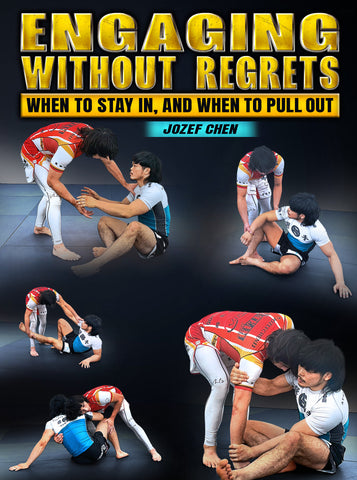
Jozef Chen
Engaging Without Regrets
How to engage and take the initiative in no-gi: the method of one of the most studied young grapplers on the circuit.
View on BJJ Fanatics →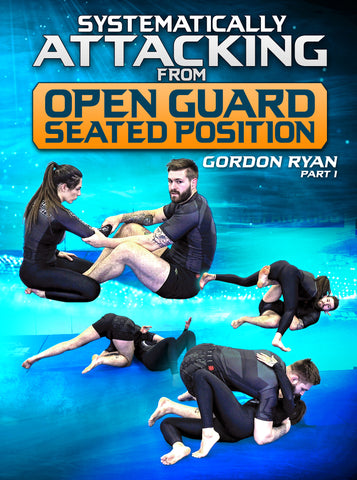
Gordon Ryan
Systematically Attacking From Open Guard: Seated Position
Gordon Ryan's seated no-gi guard: sweeps, leg entries and back takes, as a system.
View on BJJ Fanatics →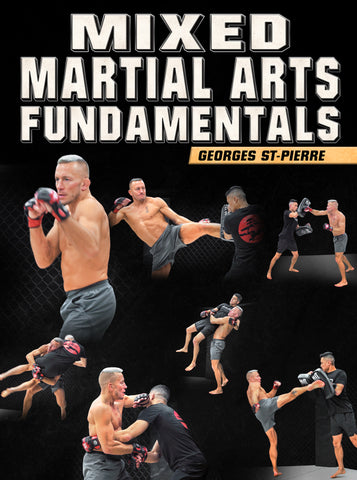
Georges St-Pierre
Mixed Martial Arts Fundamentals
MMA fundamentals from GSP: distance, takedowns, control. To understand jiu-jitsu when strikes are involved.
View on BJJ Fanatics →Disclosure: affiliate links. The price is the same for you and your purchase supports BJJ-Rules.