
BJJ and Self-Defense: Myth or Reality?
The question keeps coming up in gyms, on forums, and in conversations between practitioners: is BJJ for self-defense really effective on the street? Some swear it’s the most complete discipline...

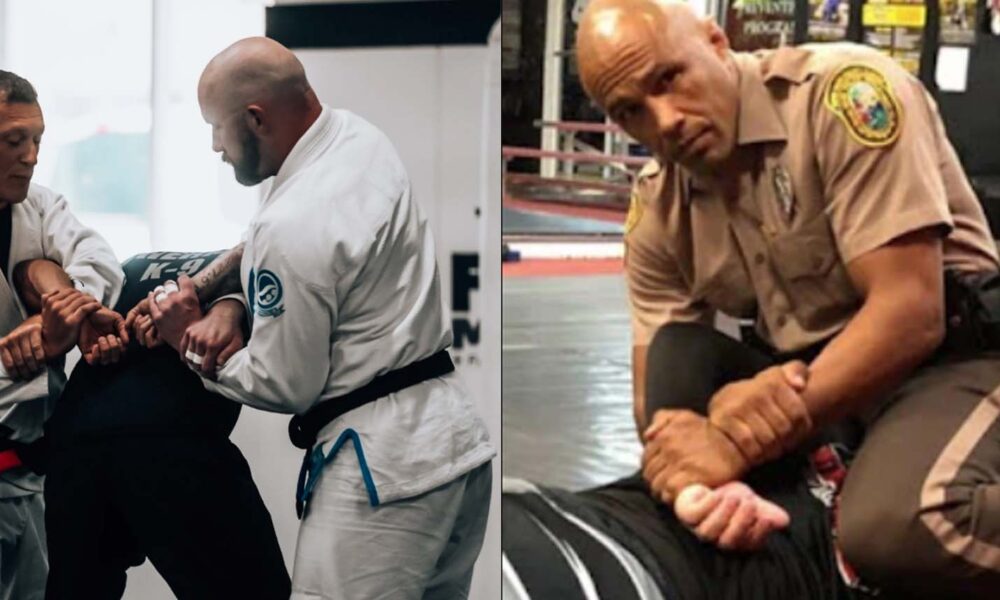
The question keeps coming up in gyms, on forums, and in conversations between practitioners: is BJJ for self-defense really effective on the street? Some swear it’s the most complete discipline out there. Others, however, point to its shortcomings against armed attackers, multiple opponents, or standing confrontations. The truth, as is often the case, lies somewhere in between.
Table Of Content
- What does BJJ for self-defense actually offer?
- What are the real limits of BJJ for self-defense?
- Sport BJJ vs self-defense BJJ: what’s the difference?
- How does BJJ for self-defense compare to other disciplines?
- What do experts say about BJJ for self-defense?
- How to maximize BJJ for self-defense?
- Conclusion: BJJ for self-defense, a solid foundation but no magic bullet
- FAQ: BJJ and self-defense
We’re not here to sell a dream. BJJ is an extraordinary discipline, and we defend it daily on this site. But precisely because we love it, we owe it an honest analysis: what does BJJ for self-defense actually bring to the table? Where do its limits begin? And how should you train to get the most out of it in this context?
⚡ Key takeaways
| ✅ Strengths | Ground mastery, stress management, control without injury |
| ⚠️ Limits | Multiple attackers, weapons, standup phase, real-world environment |
| 🥋 Useful level | Blue belt (~2 years of regular practice) to control an untrained person |
| 💡 Verdict | A solid, valuable foundation, best complemented with standup work (judo, wrestling, boxing) |
What does BJJ for self-defense actually offer?
Brazilian Jiu-Jitsu offers three major assets in self-defense: mastery of ground combat, management of physical and psychological stress, and the ability to control an opponent without seriously injuring them. Furthermore, these skills, acquired through regular sparring, give the practitioner a considerable advantage against an untrained person.
Ground mastery: a decisive advantage
The statistic has been circulating in martial arts circles for decades: the vast majority of fights end up on the ground. Granted, this figure is often disputed or poorly sourced. Nevertheless, field observation (police officers, security agents, military personnel) confirms a simple reality: whenever there’s prolonged physical contact, bodies fall. Consequently, whoever knows what to do once on the ground holds a considerable advantage.
This is precisely where BJJ for self-defense excels. Indeed, an intermediate-level practitioner (say, a blue belt with two or three years of regular practice) will be able to control an untrained opponent on the ground, neutralize them, and choose between holding them in place or getting back up. Therefore, this capacity for choice is fundamental in self-defense: it avoids escalation toward strikes that could cause serious injury, or even legal consequences.
Handling physical and psychological pressure
Training regularly in BJJ means, above all, learning to function under pressure. Specifically, sparring exposes the practitioner weekly to situations of physical discomfort, fatigue, and rising panic. Progressively, you learn to manage adrenaline, to think under stress, and to avoid panicking when someone grabs you or takes you down.
Indeed, this habituation to stress is one of the most underrated benefits of BJJ for self-defense. Most untrained people freeze or panic during a physical assault. Conversely, a regular practitioner has a range of automated bodily responses that allow them to act rather than react. To better understand how to develop this stress management, check out our article on how to improve in BJJ with two training sessions per week.
The ability to control without destroying
An often-overlooked aspect of BJJ for self-defense concerns proportionality. In practice, control techniques (pins, progressive joint locks) make it possible to neutralize someone without causing serious harm. Moreover, this is an important nuance, both ethically and legally. For instance, in many contexts, whether it’s a family dispute that escalates, an individual in crisis on public transport, or a conflict in a public space, the ability to control without injuring is invaluable.
By comparison, striking-focused disciplines (boxing, karate, MMA on the feet) offer far less gradation. In other words, BJJ gives you the tools to scale your physical response.
What are the real limits of BJJ for self-defense?
Brazilian Jiu-Jitsu presents four major limits in self-defense: an inability to handle multiple attackers, the absence of weapons defense in the modern curriculum, the gap between training conditions and real-world environments, and the lack of standup work in most gyms. However, these shortcomings don’t disqualify BJJ; rather, they call for a clear-eyed practice.
The multiple attackers problem
This is the most obvious and most serious limit. BJJ is designed for one-on-one combat. On the ground facing a single opponent, you’re in your element. However, on the ground facing two opponents, you’re potentially in a life-threatening situation. The control techniques that work perfectly in a duel become traps when a second individual can strike freely.
Therefore, the fundamental rule of every self-defense expert applies here without exception: if you face multiple attackers, the absolute priority is to escape, not to fight. In other words, no discipline (BJJ, MMA, karate, Krav Maga) gives you a real advantage in this situation. In short, anyone claiming otherwise is selling you something — namely, self-defense classes.
Weapons: a reality BJJ doesn’t address
Modern Brazilian Jiu-Jitsu, the kind practiced in the vast majority of gyms, doesn’t integrate weapons defense. Specifically, no knife, no baton, no firearm. Granted, the original Gracie Jiu-Jitsu, as taught by Carlos and Helio Gracie, included more of these scenarios. However, this content has largely disappeared from contemporary sport-oriented teaching.
Against a knife-armed attacker, “guaranteed” self-defense techniques simply don’t exist, regardless of the discipline. Indeed, some Krav Maga schools teach disarming techniques with disconcerting confidence, but real-world case studies and force-on-force simulations (with marker-knives coated in paint) invariably show the same thing: the “defender” ends up covered in marks. Ultimately, escape remains the only sensible response. BJJ, at least, doesn’t claim otherwise.
Environment: street ground is not a tatami
Training the closed guard, the triangle, the rear naked choke on a clean, soft mat is one thing. Conversely, reproducing these techniques on concrete, in the dark, dressed normally, potentially injured, is another. Of course, the reflexes acquired in training remain valid. However, their application in a real environment requires adaptations that standard sport practice doesn’t always prepare you for.
Notably, some gyms integrate this reality by offering scenarios in street clothes, standing, in confined spaces. As a result, it’s a relevant approach for those specifically looking to develop practical self-defense skills.
The standup phase: sport BJJ’s Achilles heel
The vast majority of BJJ sessions start on the ground or from a kneeling position. As a result, standup work (takedowns, throws, clinch breaks) is often neglected. Yet in a real assault, everything starts standing up. Therefore, knowing how to safely bring the fight to the ground is a skill in itself, and it requires specific work.
Practitioners who complement their BJJ with judo or wrestling have a far more complete profile for self-defense. To be clear, this isn’t a critique of BJJ; it’s an invitation to train intelligently.
Sport BJJ vs self-defense BJJ: what’s the difference?
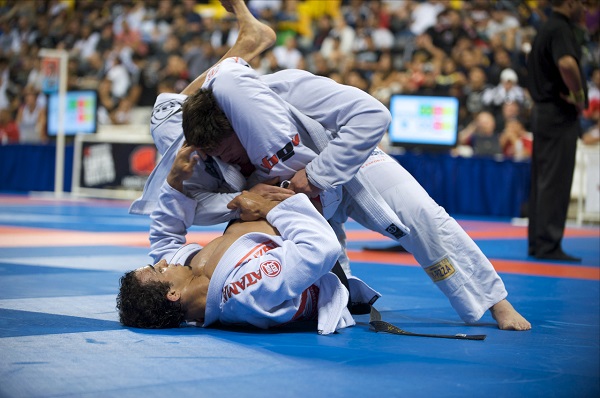
Sport BJJ and self-defense-oriented BJJ are two distinct approaches to the same discipline. Specifically, the first is optimized for regulated competitions (IBJJF, UFC BJJ, no-gi tournaments). The second, in contrast, emphasizes realistic scenarios: standup phase, defense against strikes, uncontrolled environments. Ultimately, understanding this distinction helps you choose the practice aligned with your goals.
The competitive approach: effective but specialized
Sport BJJ, the kind practiced at IBJJF competitions, at the UFC BJJ, in no-gi tournaments, is optimized for scoring points or finishing submissions against an opponent of similar level, within a regulated framework. For instance, some positions favored in competition, like reverse De La Riva or certain leg lock configurations, are technically brilliant. However, they remain poorly suited to a street context.
The self-defense approach: back to fundamentals
Conversely, self-defense-oriented BJJ emphasizes the standup phase, combat entries, defense against ground strikes, and realistic scenarios. Notably, Gracie Combatives, developed by Ryron and Rener Gracie, is the most structured and accessible example. Other approaches also exist, such as BJJ integrated into Krav Maga or military programs, although their effectiveness varies considerably.
If your primary goal is self-defense, rather than competition or sport practice for its own merits, then it’s worth seeking out a gym that offers this type of specific training, or complementing your sport practice with dedicated modules. Furthermore, our guide to choosing your first academy can help you in this process.
How does BJJ for self-defense compare to other disciplines?
BJJ is one of the best disciplines for one-on-one ground combat, and its skills are tested daily in sparring against resisting partners. Indeed, this is a fundamental advantage over disciplines like Krav Maga, whose techniques are rarely subjected to genuine opposition. Boxing develops standing reflexes further, and MMA offers the most well-rounded profile. Ultimately, the combination of multiple disciplines remains the most effective approach.
🥊 Self-defense comparison: BJJ vs other disciplines
| Criterion | BJJ | Krav Maga | Boxing | MMA |
|---|---|---|---|---|
| Ground combat | ⭐⭐⭐ | — | — | ⭐⭐⭐ |
| Standup phase | ⭐ | ⭐ | ⭐⭐⭐ | ⭐⭐⭐ |
| Live sparring | ⭐⭐⭐ | — | ⭐⭐⭐ | ⭐⭐⭐ |
| Control without injury | ⭐⭐⭐ | — | — | ⭐⭐ |
| Stress management | ⭐⭐⭐ | ⭐ | ⭐⭐⭐ | ⭐⭐⭐ |
| Overall versatility | ⭐⭐ | ⭐ | ⭐⭐ | ⭐⭐⭐ |
BJJ vs Krav Maga
Krav Maga presents itself as the ultimate self-defense discipline: knife defense, gun defense, multiple attackers, street scenarios. On paper, it’s appealing. However, in reality, the problem is fundamental: the vast majority of Krav Maga classes contain no sparring against a partner who actually resists. Specifically, techniques are drilled on compliant partners, in choreographed scenarios where the attacker cooperates.
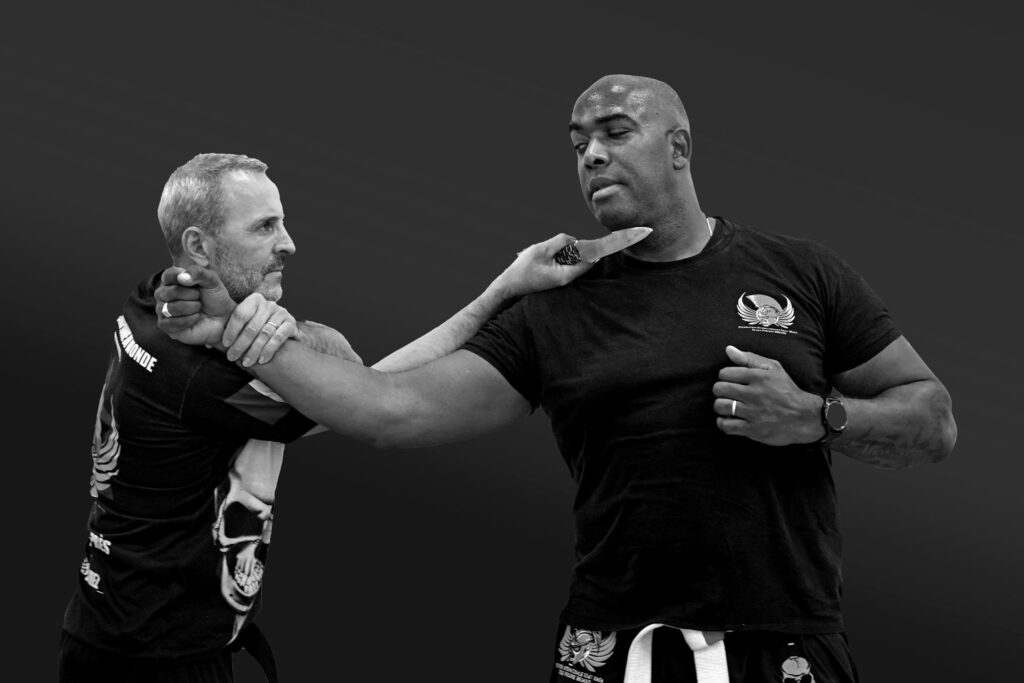
Yet it’s precisely live sparring that makes the difference between a discipline that works under stress and a discipline that gives the illusion of working. For example, in BJJ, every session ends with rounds of real combat against partners trying to submit you. Boxing forces you to take hits. Similarly, judo throws you to the ground. As a result, this constant exposure to resistance builds automatic responses that hold up under pressure. Conversely, Krav Maga, in its most widespread form, never subjects its practitioners to this test.
The absence of competition: a missing filter
Furthermore, the complete absence of competition compounds the problem. For instance, BJJ has IBJJF, ADCC, UFC BJJ. Boxing has its championships, and judo has the Olympics. Indeed, these competitions act as a ruthless filter: whatever doesn’t work in real combat naturally disappears. Krav Maga, on the other hand, has no equivalent mechanism. As a result, knife “disarm” techniques continue to be taught even though they would systematically fail against a determined attacker. Moreover, this is not only ineffective; it’s dangerous, because it creates false confidence that may push someone to fight when they should run.
Finally, quality control in Krav Maga schools is almost nonexistent. Anyone can open a gym, hang a sign, and teach “Israeli military techniques” without any verification. Of course, some schools are serious, particularly those affiliated with the original federations. However, the majority are not. By comparison, the BJJ belt system, validated by daily sparring, ensures a minimum of credibility: a blue belt who rolls three times a week has verifiable skills. A “Krav Maga instructor” certified over a weekend, in contrast, has much less.
So let’s be clear: we’d take a BJJ beginner with six months of real sparring over a Krav Maga practitioner with three years of choreographed scenarios. To put it bluntly, the first has been tested. The second only thinks they have.
BJJ vs Boxing
Boxing develops valuable qualities: distance management, timing, punching power, defensive standing reflexes. However, it doesn’t address the ground, which remains a frequent reality in physical confrontations. For example, a boxer facing someone who takes them down and knows BJJ ends up in serious trouble. Once again, complementarity is the key.
BJJ vs MMA
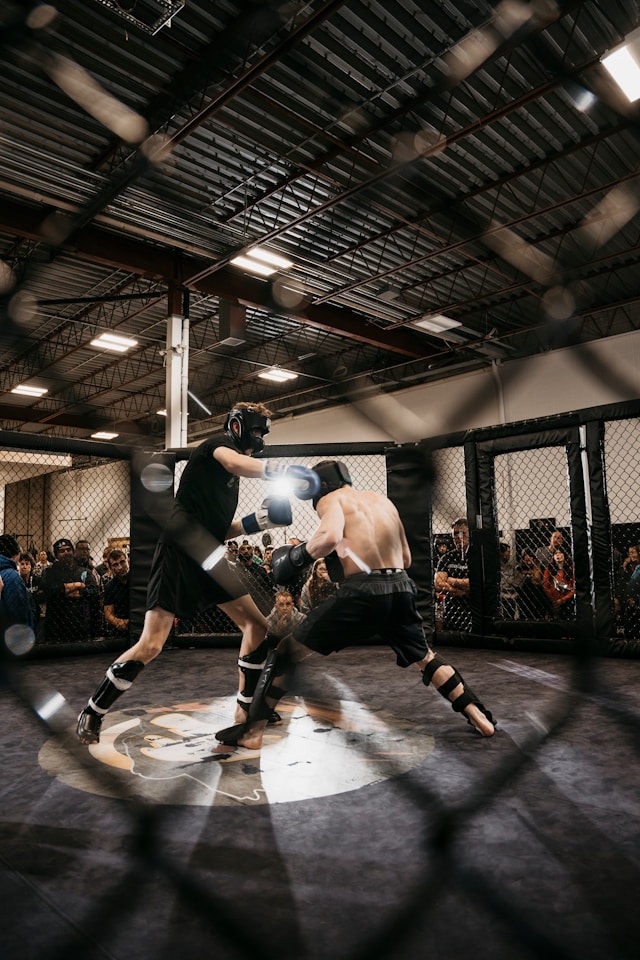
MMA is arguably the most complete preparation for a one-on-one physical confrontation: standup striking, clinch, takedowns, ground. Indeed, a serious MMA practitioner has a very well-rounded profile for self-defense. Furthermore, their ground game, nourished by BJJ and wrestling, reaches a formidable level among experienced practitioners. However, the main constraint remains the availability of gyms and the intensity of training, often higher than in pure BJJ. Consequently, for those who want a single discipline, MMA is probably the most coherent choice for a comprehensive self-defense goal.
What do experts say about BJJ for self-defense?
Security professionals (police officers, military, security agents) are among BJJ’s most convinced defenders for self-defense. The main reason is simple: Brazilian Jiu-Jitsu allows you to control an individual without resorting to strikes, which corresponds precisely to legal proportionality requirements in the use of force.
Therefore, many law enforcement training programs integrate ground grappling elements directly inspired by BJJ. Indeed, legends of the discipline like Rickson Gracie have always insisted on Brazilian Jiu-Jitsu’s original purpose as a self-defense system before being a competition sport. In a recent interview published on BJJEE, the master expressed his vision without holding back:
The core of jiu-jitsu, in my vision, is self-defense, not competition. Competition is great for people who like to compete, but for everyone, you’d love to learn how to survive, how to defend yourself from an attacker, how to protect someone you love.
— Rickson Gracie
Serious self-defense instructors are generally unanimous on one point: no single discipline covers every scenario. That’s why the best approach remains regular practice of a grappling discipline (BJJ, judo, wrestling) combined with striking work and clear-eyed reflection on real-world contexts of aggression. Ultimately, BJJ for self-defense brings an exceptional foundation, provided you don’t overestimate its capabilities in situations beyond its scope.
How to maximize BJJ for self-defense?
To get the most out of BJJ for self-defense, five priority areas stand out: strengthen standup work, favor dominant control positions, train in realistic conditions, understand the legal framework, and vary your sparring partners. Below are the practical details, split between mat work and broader context.
Adjust your training on the mat
Work the standup. Make sure your practice includes takedowns and clinch work. For instance, if your gym exclusively starts sparring from the knees, complement with judo or wrestling (or ask your instructor to teach you takedown entries). Indeed, the ability to master the standup-to-ground transition is fundamental in self-defense.
Favor control positions. In self-defense, back control and mount are your best positions: they allow you to control or stand back up quickly. However, complex guards and advanced leg lock configurations, while brilliant in competition, are less relevant on the street. Therefore, return regularly to the fundamentals. Our articles on the closed guard and the half guard detail the basic positions to master in priority.
Simulate realistic conditions. Notably, some gyms offer scenarios in street clothes, in confined spaces, against standing attacks. If accessible, it’s an excellent way to test and adapt your reflexes to “reality.” Once again, real-world stress is a completely different beast.
Build awareness beyond the gym
Understand legal limits. In most jurisdictions, self-defense law requires a response proportional to the threat. For instance, in France, this is codified in article 122-5 of the Penal Code. Furthermore, BJJ for self-defense, with its progressive control options, is particularly well-suited to this legal constraint. In practice, controlling someone on the ground with a pin will always be more defensible in court than striking them in the face.
Roll with strangers. Open mats, seminars, competitions: anything that exposes you to different styles, varied body types, and heterogeneous levels strengthens your adaptability. Indeed, a practitioner who has only rolled with the same partners for years will struggle more to adapt to the unpredictability of a real opponent.
Conclusion: BJJ for self-defense, a solid foundation but no magic bullet
Is BJJ for self-defense effective? Yes, with important nuances. Indeed, Brazilian Jiu-Jitsu offers unmatched ground mastery, remarkable physical stress management, and the rare ability to neutralize an opponent without excessive violence. Furthermore, these are real qualities, tested, and recognized by security professionals.
However, contemporary sport BJJ is not a complete self-defense program. Specifically, it doesn’t prepare you for multiple attackers, weapons, or situations that start and end standing. Consequently, overestimating its capabilities in these areas would be dangerous.
The honest answer to “BJJ for self-defense, myth or reality?” is therefore this: it’s a partial and valuable reality, to be complemented intelligently according to your needs and life context. Indeed, seriously practiced, Brazilian Jiu-Jitsu will give you tools the vast majority of people don’t have. Conversely, practiced without clarity about its limits, it can create false confidence.
Finally, let’s remember the essential: the best self-defense remains situational awareness. In other words, avoiding risky situations, de-escalating verbally, fleeing when possible. Ultimately, BJJ is what you have left when everything else has failed. And there, you’ll be glad you trained.
FAQ: BJJ and self-defense
Is BJJ for self-defense enough to defend yourself on the street?
BJJ alone is not enough to cover every self-defense scenario. Granted, it excels in one-on-one ground combat. Nevertheless, it doesn’t prepare you for multiple attackers, weapons, or the standup phase. Therefore, complementing BJJ for self-defense with judo, wrestling, or boxing significantly strengthens your ability to defend yourself in varied situations.
How long does it take to become effective in BJJ for self-defense?
With about two years of regular practice (2 to 3 sessions per week), a blue belt practitioner already has solid skills to control an untrained opponent on the ground. In reality, stress management reflexes and control automatisms start to develop within the first 6 to 12 months of serious practice.
Is BJJ suitable for women in self-defense?
BJJ is particularly suited to women for self-defense, because it relies on technique and leverage rather than brute strength. Therefore, a trained female BJJ practitioner can control a heavier, stronger opponent thanks to the mechanical principles of the discipline. To explore this topic further, check out our complete BJJ guide for women.
What’s the difference between sport BJJ and self-defense BJJ?
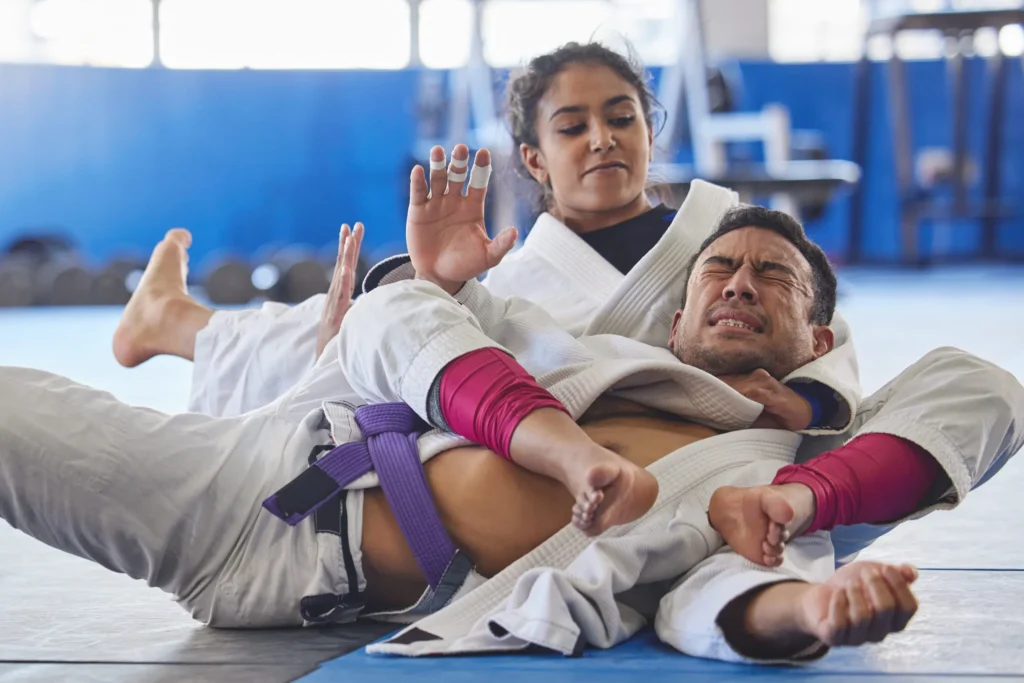
Sport BJJ is optimized for regulated competitions: it prioritizes scoring, technical submissions, and complex guards. Conversely, self-defense-oriented BJJ emphasizes the standup phase, defense against strikes, scenarios in street clothes, and realistic situations. For instance, among the most well-known examples of this second approach is Gracie Combatives.
Can BJJ help me against a knife-armed attacker?
No. No martial arts discipline guarantees reliable defense against a knife-armed attacker. Moreover, BJJ doesn’t integrate weapons defense. Consequently, facing a knife, the only sensible response is escape. Indeed, the “disarming techniques” presented in some classes are dangerously optimistic and in no way reflect the reality of a knife assault.
Is Krav Maga more effective than BJJ for self-defense?
No. Krav Maga presents itself as a complete self-defense system, but its fundamental problem is the absence of live sparring in most schools. Specifically, techniques are drilled on compliant partners, without ever being tested against genuine resistance. Conversely, BJJ, boxing, judo, and MMA all require regular sparring against partners who actually resist. Indeed, it’s precisely this daily confrontation with the reality of combat that develops skills usable under stress.
Can I use BJJ in legitimate self-defense without legal risk?
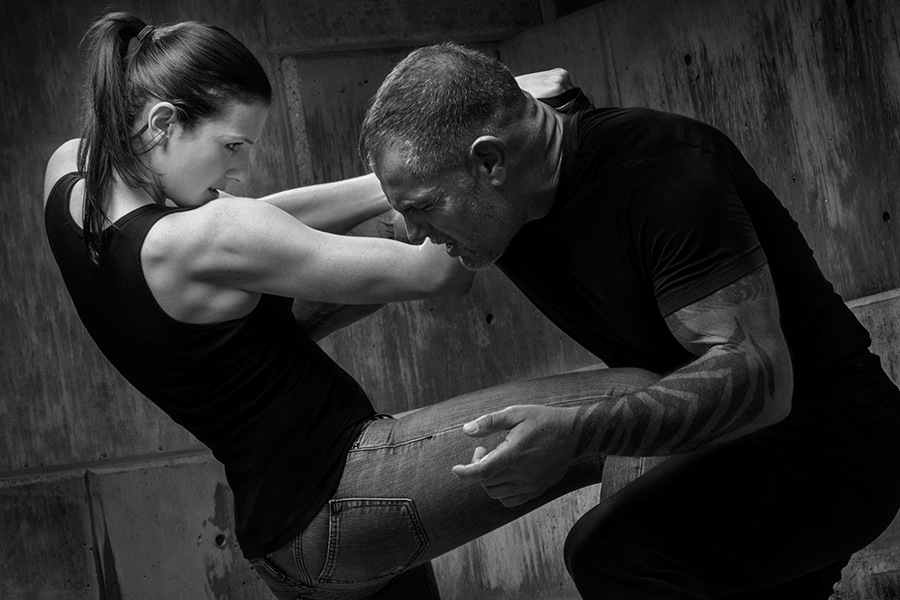
Self-defense laws in most countries require a response proportional to the threat. Therefore, BJJ for self-defense, with its progressive control options, is particularly well-suited to this legal framework, because its control techniques (pins, progressive locks) allow you to neutralize an opponent without inflicting serious injury. Indeed, this is a concrete legal advantage over disciplines based on striking. That said, legal standards vary by jurisdiction, so always consult local law.
⚠️ Disclaimer. This article is written for informational purposes and reflects the author’s experience and public sources. It does not constitute legal advice or professional self-defense training. In a real assault, your absolute priority remains your physical safety and escape. No martial arts technique guarantees the outcome of a confrontation.
To go further on BJJ practice, check out our complete guide to starting Brazilian Jiu-Jitsu, our article on how to choose your first academy, and our piece on why BJJ is booming in France.