 EN
EN FR
FR PT
PT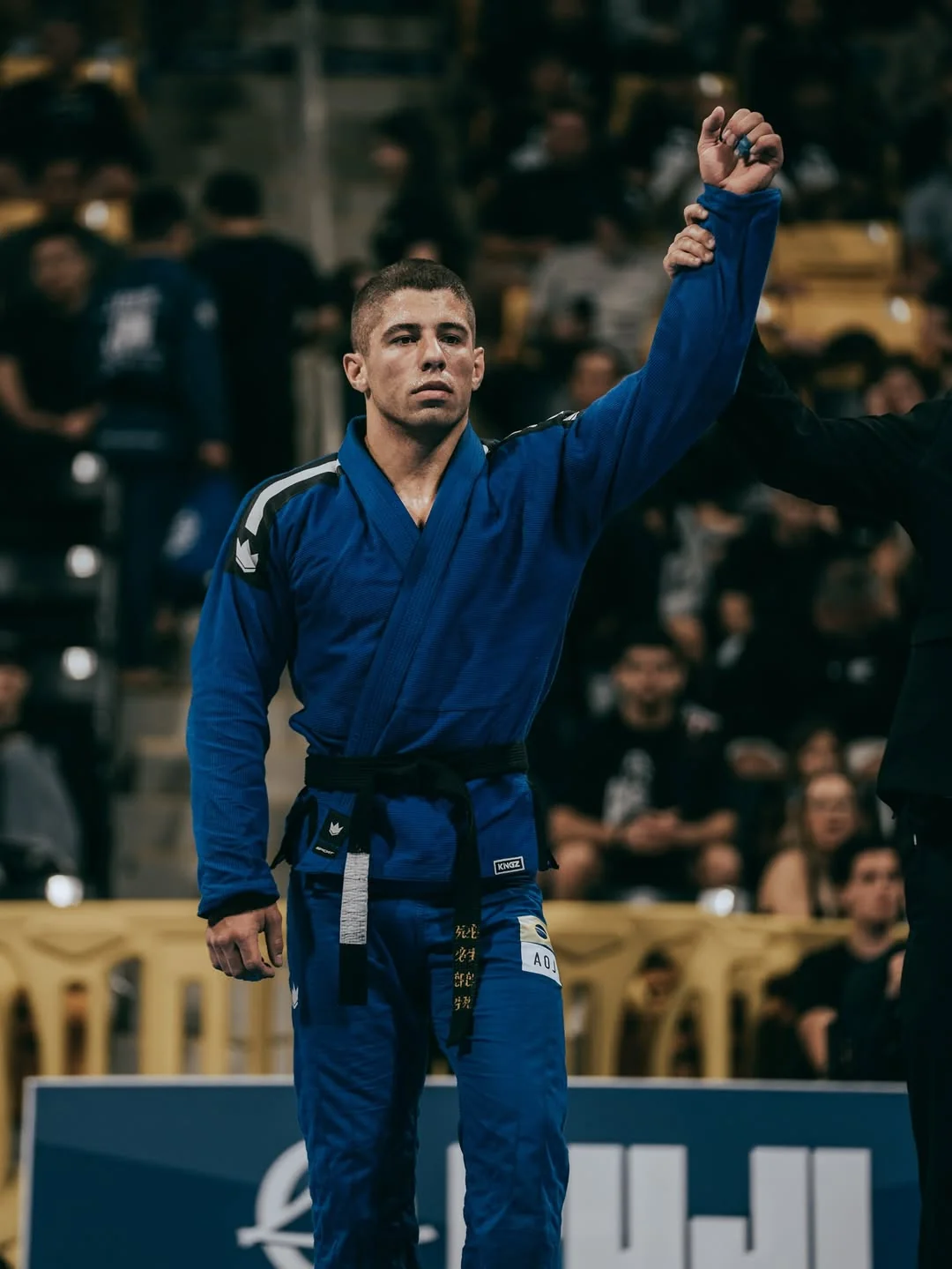
Four matches, four chokes from the back, a final wrapped up in under a minute. At the 2026 Worlds, everyone knew what Tainan Dalpra was going to do, and nobody could stop it. It isn’t magic, it’s a system. Here is how it works, and where to start learning it.
Watch any Tainan Dalpra match since 2021 and you will see the same thing: he stands up, sets his grips, passes, takes the back. The opponent changes, the guard changes, the sequence does not. That is the signature of Art of Jiu-Jitsu, the academy founded by Rafael and Guilherme Mendes in Costa Mesa, where Tainan has trained since he was 14. And what makes his guard passing so hard to counter is that it is not built on a technique but on an idea: distance.
This article breaks the system down step by step, then tells you where to study it. For the athlete’s story, his 2024 disqualification and his rebuild, read our Tainan Dalpra profile.
In this article8
Why Is Tainan Dalpra’s Guard Passing So Effective?
Because he always decides at which distance the match is played. Most passers learn techniques: a knee cut, a toreando, a leg drag. Tainan learned a framework those techniques fit into. At AOJ, passing is thought of in three zones. The far distance, where pant grips control the legs without engaging the body. The middle distance, the knee cut and long step zone, where the passer starts to apply weight. And the near distance, the zone of pressure, of the stacked leg drag and of the transition to the back.
Every guard player has a preferred distance. A De La Riva player wants you at middle range, hooks in place. A closed guard player wants you close. Tainan refuses the other person’s distance and imposes his own. When he feels his opponent settling in, he switches zones instead of forcing. That is why it looks like he never fights the guard: he goes around it in time.
AOJ’s Three Distances, Explained
Far: grips before the body
Tainan almost always sets his grips standing, on both pant legs at the knees or ankles. At this distance the opponent cannot place a hook, a lasso or a De La Riva. The passer has engaged nothing yet, but he has already taken away the guard’s anchor point. The toreando is born from this position: the legs are deflected to one side while the passer circles to the other.
Middle: the knee cut and the long step
If the guard player recovers his angles, Tainan moves in one zone. The knee cuts between the legs, the shoulder goes for the head, and the pressure begins. If the guard player blocks the knee cut with a half guard or a frame, the long step goes through the other side: the back leg opens, the hips turn, and the guard ends up flat. What these two passes have in common is that they chain: every defense against one opens the other.
Near: the stacked leg drag and the back take
This is the distance where Tainan is most dangerous. The leg drag, the opponent’s leg pulled across his own hip, is his favorite position. He does not necessarily try to finish the pass: he stabilizes, he crushes, he forces the opponent to turtle to protect himself. And that is exactly what he is waiting for. From there, his back take is methodical: one hook, then the other, then the collar choke. At the 2026 Worlds, all four of his wins came down this road.
This three-distance framework was laid out by his coach in an instructional that is, to date, the most faithful presentation of the AOJ system available on BJJ Fanatics.
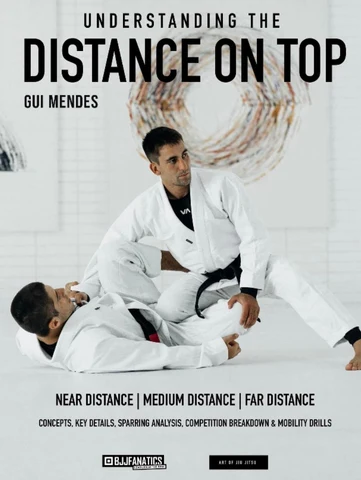
Understanding The Distance On Top, by Gui Mendes
Tainan’s coach teaches exactly what you just read: the three distances, when to switch between them, and how knee cut, long step and leg drag chain into a single plan. Two gi volumes, with his own sparring rounds broken down.
View the instructionalWhat Tainan Adds to the System: The Finish
Gui Mendes teaches the method. Tainan turned it into a submission machine. Where many AOJ passers win on points, Tainan turns almost every pass into a back attack, and almost every back attack into a choke. Three things set him apart.
The refusal to win on points. At the 2026 Worlds he did not let a single match reach the time limit: Pedro Leonardo, Matheus Luna and Natan Chueng in the final were all choked from the back. The final lasted less than a minute. That is not luck, it is policy: the back take is not an option, it is the conclusion of the pass.
The “gator roll”. Against the De La Riva, Tainan uses a shoulder roll that takes the opponent straight from the pass to the back take, without going through side control. He showed it in the European final, and the IBJJF featured it in its “Competition Tested Technique” series. It is the perfect example of his philosophy: never stop where the rulebook hands out the points.
The takedown as the first pass. In 2026 his takedowns drew as much attention as his passing: he no longer waits for the opponent to pull guard, he brings him to the mat in the position he has chosen. Once again it is a question of distance: the match starts standing, and Tainan already decides which zone it will be played in.
Does the System Have Weaknesses?
Yes, and they are instructive. Tainan has never been submitted at black belt, but he has lost. In the 2023 Worlds final, Jansen Gomes beat him 0-0 on a single advantage: a match in which the guard player refused every distance offered and never got passed. And in 2021, outside the IBJJF circuit, he lost a referee decision to Mica Galvão. In both cases the recipe is the same: deny him the middle distance, where his knee cut and long step do the work, and accept a match without points. Few athletes can do that for ten minutes. That is the whole division’s problem.
How to Work on AOJ-Style Guard Passing at Your Level
- Identify your partner’s preferred distance before attempting anything. If he plays De La Riva, he wants middle range. If he plays closed guard, he wants you close. Start somewhere else.
- Set your grips standing, on the pants, before engaging your body. A pass that starts without grips is a pass that starts inside the other person’s guard.
- Learn the knee cut and the long step together, never separately. Drill the switch: knee cut blocked, long step to the other side, and back.
- Don’t finish the leg drag too soon. Stabilize, apply weight, wait for the reaction. Your partner’s turtle is the goal, not side control.
- Study the guard player’s side too. Understanding how an AOJ guard player manages distance teaches you to anticipate his reactions when you pass.
On that last point, Gui Mendes released the exact counterpart of his top instructional, this time from the guard. The two form a whole: the same framework, seen from both sides.
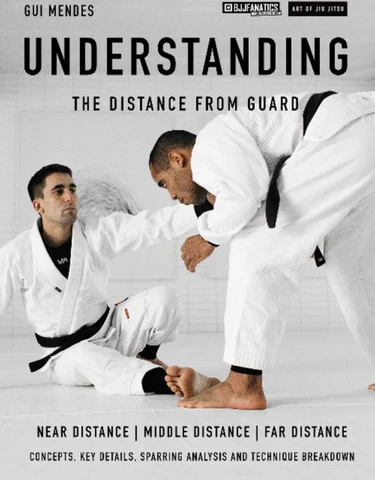
Understanding The Distance From Guard, by Gui Mendes
The same three-distance system, seen from the guard: collar-sleeve, De La Riva, X-guard, and how an AOJ guard player picks his zone. Four gi volumes. Best worked as a mirror of the top instructional.
View the instructionalWhat About Tainan’s Own Courses?
Tainan publishes on AOJ+, his academy’s platform, not on BJJ Fanatics. His masterclass Shutting Down the De La Riva has 31 lessons on passing that specific guard, and another one is dedicated to back takes. That link is not an affiliate link. Our advice: start with Gui Mendes’ framework, which gives you the logic, then go for Tainan’s details on AOJ+ once the De La Riva becomes your main problem.
FAQ: Tainan Dalpra’s Guard Passing
What is Tainan Dalpra’s favorite guard pass?
The leg drag, used with pressure to force the opponent into turtle and then take the back. He links it with the knee cut and the long step depending on the distance the guard player gives him, following AOJ’s three-distance system.
Does Tainan Dalpra have an instructional on BJJ Fanatics?
No. His courses are published on AOJ+, the Art of Jiu-Jitsu platform. On BJJ Fanatics, his coach Gui Mendes’ instructionals (Understanding The Distance On Top and From Guard) teach the system his game is built on.
What is AOJ’s three-distance system?
A way of thinking about guard passing in zones rather than techniques: far (pant grips, toreando), middle (knee cut, long step) and near (leg drag, pressure, back take). The passer picks the zone where the guard player is least comfortable and switches as soon as he feels resistance.
How did Tainan Dalpra win the 2026 Worlds?
With four submissions in four matches, all by choke from the back, and a final against Natan Chueng finished in under a minute. It was his fourth world title and his second IBJJF Grand Slam.
Conclusion
Tainan Dalpra’s guard passing is not a catalog of techniques, it is a way of reading the match. Three distances, a switch at every resistance, and a single destination: the back. That is what makes it predictable and yet impossible to stop. The good news for the rest of us is that the framework can be learned, and it works at every belt. To understand where that rigor comes from, and what it cost, Tainan’s profile tells the rest.
Read next
Learn from the best: our recommended instructionals
The videos we actually recommend, hand-picked from the BJJ Fanatics catalog.
Gui Mendes
Understanding The Distance On Top
AOJ's three-distance passing system, the one Tainan Dalpra runs, taught by his coach.
View on BJJ Fanatics →Gui Mendes
Understanding The Distance From Guard
The same distance framework, from the guard: collar-sleeve, De La Riva, X-guard.
View on BJJ Fanatics →
Georges St-Pierre
Mixed Martial Arts Fundamentals
MMA fundamentals from GSP: distance, takedowns, control. To understand jiu-jitsu when strikes are involved.
View on BJJ Fanatics →Disclosure: affiliate links. The price is the same for you and your purchase supports BJJ-Rules.