 EN
EN FR
FR PT
PT
Guard player or passer? Pressure or speed? Sooner or later, every practitioner asks what their style in Brazilian Jiu-Jitsu really is. This guide covers what shapes a game, how to build it brick by brick, and the mistakes that cost you months.
Watch a mat on a sparring night: within seconds you can tell who pulls guard, who smashes, who hunts the back. Those signatures don’t fall from the sky. They are built, often unknowingly, from body type, personality, coaching and habits. Whether you are a beginner or a seasoned competitor, understanding your style is the most reliable shortcut to get better faster and enjoy training more.
In this article13
- What is a “game” in Brazilian Jiu-Jitsu?
- The 4 factors that shape a style in Brazilian Jiu-Jitsu
- Adapting your style in Brazilian Jiu-Jitsu to your body type
- Learning from the greats to refine your game
- Explore before choosing your style in Brazilian Jiu-Jitsu
- Building a simple, logical game plan
- Build your defensive game too
- Traps to avoid when building your game
- The power of feedback to refine your style
- Your game will evolve, and that’s a good thing
- Gi vs no-gi: should you adapt your style?
- FAQ: finding your style in Brazilian Jiu-Jitsu
- Conclusion: build, test, refine
What is a “game” in Brazilian Jiu-Jitsu?
In BJJ, your “game” is the set of positions, techniques, sequences and strategies you favor. It is your signature on the mat: a way of fighting that reflects your personality, your body and your experience. Two purple belts from the same academy can have radically different games, and that is exactly how it should be.
Having a game means knowing your strengths, knowing which situations you excel in and how to bring your opponent there. It is not a list of memorized techniques but an internal logic that brings clarity to the chaos of a fight. The best grapplers in the world all have an instantly recognizable style in Brazilian Jiu-Jitsu, and that is precisely what makes them so dangerous: they drag you onto their turf before you understand what is happening.
The 4 factors that shape a style in Brazilian Jiu-Jitsu
Nobody chooses their game in a vacuum. Four elements naturally steer the direction each practitioner takes, often long before they notice it. Identifying them lets you work with them rather than against them.
Body type
This is the most visible factor. Long legs make distance guards easier, such as the spider guard, the lasso guard or the De La Riva guard. A compact frame, on the other hand, favors pressure, underhooks and close-range control. We come back to this in detail below, because it is often the first criterion to analyze.
Temperament
Calm or explosive? Methodical or instinctive? Your psychology shows in your game. A patient competitor will build long sequences from guard, while an aggressive temperament will look for the scramble and the quick submission. No profile is better than another: what matters is aligning your game with your true nature, because a style that fits you holds up better under fatigue and stress.
Your coach and your academy
What your coach teaches becomes your technical foundation. An academy that emphasizes guard work produces guard players; a no-gi and leg lock oriented gym forms leg specialists. Choosing the right academy therefore directly influences how your style develops, sometimes for years.
Your training environment
Competition or hobby? Gi or no-gi? These parameters steer your preferences. In IBJJF competition, gi grips and the point system shape a more positional type of game. In no-gi or submission-only, the approach changes radically: leg locks and fast transitions take over.
Adapting your style in Brazilian Jiu-Jitsu to your body type
Body type doesn’t determine everything, but it is an excellent starting point to understand which positions suit you best. Here are the broad tendencies, keeping in mind that exceptions always exist and that champions love to contradict them.
Lanky profile (long legs and arms)
Long limbs make distance control easier. The spider guard, the lasso, the De La Riva and the triangle become natural weapons, and the back take is often more accessible thanks to how easily the hooks lock in. Keenan Cornelius, with his tall frame and lapel guards, illustrates this profile perfectly: his long legs let him weave controls few opponents know how to untangle.
Compact or stocky profile
A low center of gravity is a major asset. Pressure games such as pressure passing, the high half guard or knee on belly fit like a glove. Getting to dominant positions is easier, and sweeps from the butterfly guard make full use of a compact body’s power. Marcelo Garcia, compact and explosive, built one of the most effective games in history around this guard, the guillotine and upper-body control.
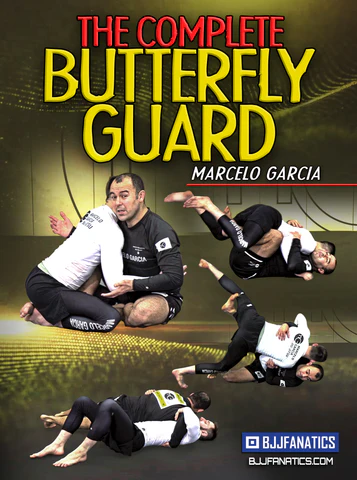
The Complete Butterfly Guard, by Marcelo Garcia
If you have a compact build, this is the reference system for turning the butterfly guard into a sweeping machine.
See the instructionalHeavy and athletic profile
Here, pressure and weight control become weapons in their own right. The toreando, the crushing mount and chokes from top position are the classic signatures of dominant heavyweights. Marcus “Buchecha” Almeida nonetheless proved that a heavyweight could also play guard, hit the berimbolo and chain transitions, shattering every stereotype of his division.
Learning from the greats to refine your game
Watching high-level athletes is one of the best ways to understand the different styles in Brazilian Jiu-Jitsu. The idea is not to copy but to spot what resonates with you: type of guard, pace, attacking philosophy. Here are a few emblematic profiles BJJ-Rules has profiled.
The creative guard players
Rafael Mendes embodies the aerial game: berimbolo, inversions, fluid transitions from De La Riva. The Miyao brothers pushed this approach even further, with a style built entirely around the berimbolo and the back take. This kind of game demands hip mobility and a lot of repetition, but once it is rolling, it leaves the opponent completely passive.
The reference passers
Faced with ever more sophisticated guards, some athletes made guard passing their trademark. Leandro Lo is the most accomplished example: upright posture, pant grips, relentless changes of direction and a toreando nobody managed to neutralize for long. His game shows that a passer doesn’t need to smash to dominate, as long as he never lets the guard settle.
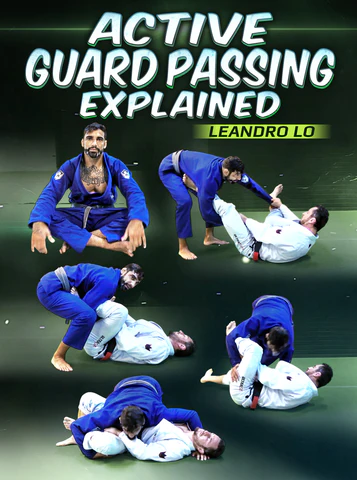
Active Guard Passing Explained, by Leandro Lo
For those who recognize themselves in the passer profile: Leandro Lo’s mobile passing method, explained by the man himself.
See the instructionalThe technical innovators
Keenan Cornelius shook up the gi game with his lapel guards, including the worm guard and the squid guard. His path proves that a style can be built around a single concept, provided you master it in depth. More recently, Norway’s Tarik Hopstock popularized the “Tarikoplata”, a shoulder lock derived from the omoplata that bears his name, proof that innovation is not reserved for Brazilians.
The effective classics
Roger Gracie is the opposite of spectacular innovation: mount, cross collar choke, armbar. White belt techniques executed at such a high level that nobody could defend them. If you are looking for a long-term model, remember this one: mastered simplicity remains the most fearsome weapon in jiu-jitsu.
The pressure machines
Marcelo Garcia combined explosive sweeps from the butterfly guard with unstoppable guillotines. Buchecha crushed opponents with his toreando and a feline mobility surprising for his size. Two different approaches to pressure, but one thing in common: a clear game plan, repeated thousands of times until it became automatic.
Explore before choosing your style in Brazilian Jiu-Jitsu
At the start, it is normal to feel “all over the place” technically. This is the exploration phase, and it is essential. You try different guards, different submissions, different paces, and this stage lets you gather data about yourself before making choices. Skipping it to specialize too early is a common mistake among impatient practitioners.
The key is to observe your natural tendencies. Which positions do you instinctively return to? Where do you feel comfortable? Which techniques work regularly in sparring? From these answers, you begin to sketch the outline of your game. It is not about limiting yourself, but about focusing your energy where the return on investment is highest.
This phase can last from a few months to several years depending on how often you train. Even with two sessions a week, it is entirely possible to structure your game, provided you train with intent and take note of what works.
Building a simple, logical game plan
A good game doesn’t require a hundred techniques. It requires logical sequences around a few key positions. The goal is to build “technical chains”: sequences where each movement leads naturally to the next, and where every reaction from the opponent already has its answer.
Example: game plan from half guard
Half guard is a position accessible at every level. Here is a simple sequence to illustrate the logic of a game plan:
- Main attack: come up on a single leg with the underhook
- Alternative: transition to deep half if the opponent blocks the underhook
- Follow-up: sweep, then pass the guard from top
- Plan B: kimura if the opponent posts a hand on the mat to resist the sweep
Each “branch” grows over time. Black belts have an entire technical tree, but the roots always stay simple. It is by testing these sequences in sparring, week after week, that they become reflexes.
Example: game plan from closed guard
Closed guard offers an excellent framework for building a structured offensive game:
- Main attack: break the posture, look for the cross collar choke or the triangle
- Alternative: armbar if the opponent resists the triangle
- Sweep: hip bump if the opponent leans back to escape
- Transition: move to open guard if the guard gets broken
The idea is always the same: every reaction from the opponent leads to a planned option. The simpler the plan, the easier it is to execute under pressure. You can always enrich it later; the reverse, simplifying a game that has grown too dense, is much harder.
Build your defensive game too
A style in Brazilian Jiu-Jitsu is not just about attacking. Defense conditions everything else. Without the ability to survive under pressure, recover guard and stay calm in bad positions, no offensive game can unfold with confidence. Many practitioners plateau not because they attack poorly, but because they panic as soon as they get dominated.
Ask yourself a few essential questions. What is your go-to escape from side control? How do you react under mount? What is your strategy when someone takes your back? Working on these answers means building a complete game, and a far calmer one in competition and in training alike.
Keenan Cornelius, despite a highly identifiable lapel-based offensive game, is also a formidable defender. His composure under pressure and his ability to counter-attack from difficult positions show that the best never neglect this side of the sport.
Traps to avoid when building your game
Building your style in Brazilian Jiu-Jitsu is a long process. Certain mistakes come up again and again and can slow your progress by months, even years. Here they are, in order of how often they show up on the mats.
Changing style too often
Testing is essential, but without consistency you consolidate nothing. If you change guard every two weeks, none will ever be mastered. Basic rule: give a new approach at least two to three months before judging whether it suits you or not.
Following only YouTube trends
What is “trendy” is not always suited to your level or your body. A spectacular berimbolo on Instagram won’t necessarily be the best option for a 95 kg beginner. Online inspiration is valuable, but it must always pass through the filter of what actually happens on the mat.
Getting discouraged too quickly
A technique often only “works” after dozens of attempts. If a move fails, question the timing, the execution details and your overall understanding of the position, not just the move itself. Perseverance is what separates a style under construction from a style abandoned.
Neglecting the fundamentals
Wanting to play complex guards before mastering the basics is a classic mistake. Closed guard, fundamental escapes, basic top control: all of this forms the foundation on which an advanced game can be built. Without solid foundations, the whole structure collapses under pressure.
The power of feedback to refine your style
To progress efficiently, nothing replaces outside input. A coach, an experienced partner or even a filmed sparring session can reveal unconscious patterns, good or bad, in your practice. Do you always play the same guard escape? Do you systematically hunt the ankle lock while exposing your back? This information is invaluable for adjusting your game plan with full awareness.
The best competitors in the world film their training and analyze their matches. It is a tool accessible to everyone, even at amateur level: a phone propped at the edge of the mat is enough. Ten minutes of review after a session will often teach you more than an hour of blind drilling.
Your game will evolve, and that’s a good thing
Your game today is not your game tomorrow. It will evolve with your level, your age, your injuries and your inspirations. Sometimes you will change style completely without realizing it, and that is healthy. The BJJ belt system reflects this permanent evolution: each promotion corresponds to a phase of technical and strategic maturation.
John Danaher, one of the most influential coaches in BJJ history, often sums up this idea: better to be excellent at a few things and build from there than to try to be good at everything. This philosophy applies perfectly to building a style in Brazilian Jiu-Jitsu. Mastering three techniques in depth will always beat knowing thirty on the surface.
Gi vs no-gi: should you adapt your style?
The question comes up often, and the answer is nuanced. The fundamental principles (control, pressure, positioning) stay the same. But the tools change: in the gi, sleeve and collar grips open specific options such as lapel guards or collar chokes. In no-gi, those grips disappear, and the game leans more toward underhooks, overhooks and leg locks.
Many competitors develop two variants of their game, a gi version and a no-gi version, built on the same positional logic but with different finishes. That is what makes athletes able to perform in both formats so impressive.
FAQ: finding your style in Brazilian Jiu-Jitsu
How long does it take to find your style in Brazilian Jiu-Jitsu? It varies from person to person and depends on training frequency. Some start structuring their game after six months, others after two years. What matters most is building consciously rather than letting chance decide.
Can you change your game after several years? Yes, and at certain moments it is even recommended. Your body, your desires and your level evolve. A 25-year-old practitioner won’t have the same game at 40, and that is perfectly normal. Buchecha himself changed his style over the course of his career.
Do you need a different game in gi and no-gi? Not necessarily two completely different games, but adjustments are natural. Sleeve grips disappear in no-gi, leg attacks take more space and the pace tends to be faster. The positional logic often stays the same.
What is the best style in Brazilian Jiu-Jitsu? There is no universal “best” style. The best game is the one that matches your body type, your temperament and your goals. Roger Gracie dominated with basic techniques; Keenan Cornelius innovated with complex guards. Two opposite approaches, two exceptional records.
How do you know if you are a guard player or a passer? By observing your natural tendencies in sparring. If you instinctively pull guard and feel comfortable on the bottom, guard play is probably your path. If you prefer to stay standing and work from the top, passing is your home ground. Some excel at both, but starting with one focus is more effective.
Conclusion: build, test, refine
Finding your style in Brazilian Jiu-Jitsu doesn’t have to be spectacular. Your game needs to make sense to you, be reproducible under pressure and adaptable to situations. Building around your strengths, your internal logic and your reality on the mat is how you progress fastest.
Watch the greats, test in sparring, ask for feedback, adjust. It is ongoing work, but it is also what makes Brazilian Jiu-Jitsu so rich. The day you start playing your jiu-jitsu rather than someone else’s, everything changes. And to check you really know the guards mentioned in this guide, our BJJ guards quiz is waiting for you.
Read next
Learn from the best: our recommended instructionals
The videos we actually recommend, hand-picked from the BJJ Fanatics catalog.

John Danaher
Go Further Faster Bundle
The complete gi fundamentals in 8 volumes: guard retention, pin escapes, passing. The foundation, from the most influential coach of the era.
View on BJJ Fanatics →
Lachlan Giles
The Half Guard Anthology
Half guard from A to Z by the clearest teacher in no-gi. Ideal for smaller grapplers.
View on BJJ Fanatics →
Ffion Davies
No Gi Closed Guard
No-gi closed guard, an underused position Ffion turns into a submission machine.
View on BJJ Fanatics →Disclosure: affiliate links. The price is the same for you and your purchase supports BJJ-Rules.