 EN
EN FR
FR PT
PT
Kimono or rashguard? It is the first question everyone asks when they walk into an academy. The usual answer, “it depends on your goals”, is true but useless. Here is what the fabric really changes, and our straight answer for beginners.
Brazilian jiu-jitsu comes in two forms: with the kimono, the gi, and without it, no-gi. Same martial art, same positions, same belt system, but two very different games once you are on the mat. In this article we explain concretely what wearing a kimono changes, we go through the techniques specific to each format, and above all we give you our recommendation for starting out, based on what we see in academies, in competition and on the world stage. If you have never set foot on a mat, start with our complete guide to starting BJJ.
In this article6
The gi: jiu-jitsu with the kimono
The BJJ kimono consists of a thick woven cotton jacket, reinforced trousers and a coloured belt that shows your rank. Inherited from the Japanese judogi, it has evolved for ground fighting: tighter cuts, tougher fabrics, reinforced seams at stress points. A judogi is not a BJJ gi, and the difference goes well beyond the cut, as we explain in our comparison of BJJ vs judo.

How the fabric shapes the game
In practice, the kimono changes everything. Sleeves, lapels, collar, trousers: every inch of fabric becomes a handle. You grab the opponent’s sleeve to neutralise an arm, take the collar to set up a choke, pin a knee through the trousers to stop guard retention. This grip fighting makes the game slower, more methodical and technically very rich. If no-gi is a sprint, the gi is a game of chess.
This is why many instructors recommend starting in the gi. The calmer pace lets you understand the basics: where to put your hips, how to manage distance, why one hand placement changes everything. Mistakes are punished immediately, because your partner grabs your collar and reminds you that details matter.
In competition, the gi remains dominant. The four IBJJF Grand Slam tournaments (Europeans, Pan, Brasileiro, Worlds) are gi events. In France, almost every CFJJB Open offers both formats on the same weekend, but it is the French Gi Championship that serves as the basis for national team selection, as you will see in our competition calendar. If you are aiming at federation competition, the gi is still the royal road.

No-gi: jiu-jitsu without the kimono
No-gi is BJJ without the kimono. Concretely, you wear a rashguard (a tight lycra top), grappling shorts or spats. No fabric to grab, no collar, no sleeve: only the body is left. Controls are taken on the wrists, the neck, the ankles, or through underhooks and body locks. The result is a faster, slipperier, more explosive jiu-jitsu.

This style is directly influenced by wrestling and competitive grappling. With no fabric to slow the opponent down, you have to be more mobile and more reactive, and scrambles, those chaotic transition phases where nobody controls anybody, become central. It is also the format closest to MMA preparation and self-defence, since it relies on no particular clothing.
Techniques specific to no-gi grappling
Technically, no-gi jiu-jitsu has developed its own ecosystem. Leg locks (heel hooks, kneebars, toe holds) hold a central place, and positions such as ashi garami or single leg X have become major weapons. A warning for beginners: under IBJJF rules the heel hook is banned in the gi at every level, and allowed in no-gi only from adult brown belt (since 2021). In most academies, professors reserve it for experienced practitioners. The full list of legal submissions by belt is on our BJJ rules hub.
In competition, the ADCC is regarded as the world championship of grappling, and its 2026 edition takes place this very weekend, 12-13 September in Krakow. But the most striking development remains the arrival of UFC BJJ in 2025: a professional circuit streamed free on YouTube, with the best grapplers on the planet and already ten cards in the books. When you see Aurélie Le Vern win a belt there, you understand that no-gi jiu-jitsu has become a pillar of modern BJJ.

Gi vs no-gi: the concrete differences
We have summarised the main differences in this table. It is necessarily simplified, but it gives a beginner a clear overview.
| With the kimono (gi) | Without the kimono (no-gi) | |
|---|---|---|
| Outfit | Cotton jacket + trousers + belt | Rashguard + shorts or spats |
| Grips | Collar, sleeves, lapels, trousers | Wrists, neck, underhooks, body lock |
| Pace | Slower and strategic | Faster and explosive |
| Typical techniques | Collar chokes, spider guard, lasso, worm guard | Leg locks, heel hooks, wrestling, front headlock |
| Friction | Lots of friction: solid controls | Sweat: unstable controls |
| Flagship events | IBJJF Worlds, Pan, Europeans | ADCC, UFC BJJ, IBJJF No-Gi Worlds |
| Link with MMA | Indirect | Direct |
| Belt | Worn in training | Same rank, not worn |
What the table does not say
Beyond the technical differences, there is a real difference in feel. In the gi you can “settle” your game: you take the time to build a control, to set up an attacking sequence. It is a patient, thoughtful jiu-jitsu, embodied by Roger Gracie, widely considered the greatest gi competitor in history: simple technique, surgical execution.
In no-gi, everything moves faster. Transitions are fluid, scrambles frequent. You let go of one grip, take another, go from a leg attack to a back take in two seconds. It is more instinctive and often more spectacular, and it is no accident that UFC BJJ chose this format for its cards, as we saw again at UFC BJJ 10.
Then there is the “slippery factor”. In no-gi, sweat makes controls harder and harder as the round goes on: a well-established mount can become impossible to hold five minutes later. The kimono’s fabric, by contrast, provides friction. Pins are more solid, but so are your opponent’s submissions, since your own collar can be used to choke you. Each format has its frustrations.
Gi or no-gi: which should you choose to start?
Here is the real question, and rather than answering “it depends”, we will be frank. Our recommendation fits on one line: start in the gi, unless you are a special case, then try no-gi as soon as you can. Let us explain.
Our recommendation: start in the gi
If your academy offers both formats, start in the gi. Not because it is “better” in itself, but because the calmer pace will give you time to understand what is going on. When you start, you are flooded with information: positions, technique names, reflexes to build. The kimono slows the game down just enough to absorb all of it.
Gi training also teaches rigour. Every grip counts, every detail of placement matters. It is sometimes frustrating, but it is an excellent teacher, and the foundations you build, control, pressure, patience, will serve you in every grappling format afterwards. The reverse transition, from no-gi to the kimono, is generally more laborious.

When starting in no-gi makes more sense
There are, however, situations where no-gi is a better starting point. If you come from wrestling or MMA, it will be a natural extension of what you already know. If your goal is self-defence, it is also more realistic, since nobody wears a kimono in the street. And if your academy specialises in no-gi grappling, there is no problem starting there: a good no-gi club near you beats a gi class forty minutes away.
Some beginners also find the kimono uncomfortable or intimidating. A rashguard and shorts are simpler and lighter, and there is no belt knot to master on day one. That is not a detail: comfort can be the difference between someone who comes back and someone who quits.

The best advice: try both early
This may be the one point of unanimity in the BJJ world: training both formats will make you better. The gi sharpens your technique, no-gi sharpens your reflexes. The best grapplers in history shone in both: Marcelo Garcia, five-time IBJJF world champion and four-time ADCC winner, is the most telling example, and Roger Gracie also won the ADCC absolute on top of his ten gi world titles.

A guard that works in both formats: Marcelo Garcia’s butterfly
If one guard illustrates the crossover between gi and no-gi, it is the butterfly guard: it relies on hooks and underhooks, not on fabric. Marcelo Garcia, a champion in both formats, broke it down in The Complete Butterfly Guard (BJJ Fanatics), an instructional that remains a reference for building a guard game that transfers with or without the kimono.
Transparency: affiliate link. It does not change the price for you and supports BJJ-Rules.
If your academy runs several classes a week, use them to alternate. Even with a natural preference, alternating will enrich your understanding of jiu-jitsu: you will see why some techniques work in one format but not the other, and your overall game will be stronger for it. And if you are still hesitating about the club itself, our guide on choosing your first academy will help you decide.
Frequently asked questions about gi and no-gi
Do belts count in no-gi?
Yes. The BJJ belt system is identical whatever the format: your rank stays your rank, with or without the kimono. In no-gi competition you compete in your belt division, and some submissions remain reserved for higher ranks. The only difference is that you do not physically wear it while training.
Is gi or no-gi harder?
Neither, they are hard in different ways. The gi demands more patience and precision in the grips, and is less forgiving of placement errors. No-gi demands more mobility, conditioning and reaction speed, and is less forgiving of pauses. Most practitioners find the format they know least the harder one, which is a good argument for training both.
Which format is UFC BJJ?
UFC BJJ is exclusively no-gi, with its own ruleset built for entertainment and championship belts by weight class. It is now the biggest showcase of professional jiu-jitsu, free and live on YouTube. If you have not seen it yet, watch a replay and browse our UFC BJJ section.
Can you compete in both formats?
Absolutely. Almost every CFJJB Open in France offers both formats on the same weekend, and many competitors enter both. It is an excellent way to test your game in different contexts. All the dates are in our calendar of BJJ competitions in France.
What equipment do you need to start?
For the gi: a BJJ kimono (not a judogi, the cuts differ), a white belt and optionally a rashguard under the jacket. For no-gi: a rashguard and grappling shorts with no pockets or zips, or spats. In both cases, trim your nails and bring flip-flops for the edge of the mat.
The BJJ-Rules verdict
The debate between the two formats is as old as BJJ itself. It will never be settled, and that is not the point: they are two facets of the same martial art, and each will give you something the other cannot. If we had to sum up our position in one sentence: start in the gi to build your foundations, then try no-gi early to widen your vision. And if your academy only offers one format, that is fine. What matters most is being on the mat, regularly, with curiosity and the will to improve, even with only two sessions a week. So, kimono or rashguard? Put on either one and get in the game. See you on the mat.

Read next
Learn from the best: our recommended instructionals
The videos we actually recommend, hand-picked from the BJJ Fanatics catalog.
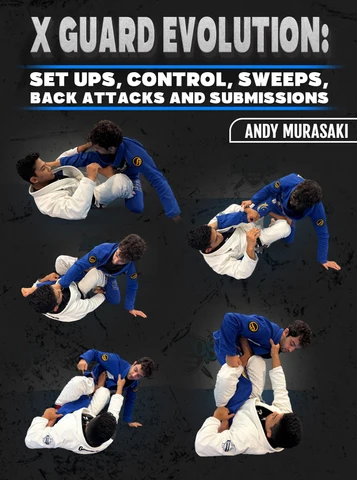
Andy Murasaki
X Guard Evolution
The modern X guard: set-ups, control, sweeps, back attacks and submissions.
View on BJJ Fanatics →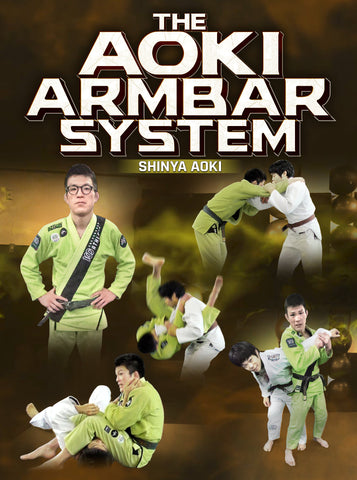
Shinya Aoki
The Aoki Arm Bar System
The armbar according to Tobikan Judan: flying entries, finishes, everything that worked in MMA.
View on BJJ Fanatics →
John Danaher
Go Further Faster Bundle
The complete gi fundamentals in 8 volumes: guard retention, pin escapes, passing. The foundation, from the most influential coach of the era.
View on BJJ Fanatics →Disclosure: affiliate links. The price is the same for you and your purchase supports BJJ-Rules.